How Hololens Displays Work

HoloLens-displays

There’s been a lot of debate concerning how the HoloLens display technology works. Some of the best discussions have been on reddit/hololens but really great discussions can be found all over the web. The hardest problem in combing through all this information is that people come to the question at different levels of detail. A second problem is that there is a lot of guessing involved and the amount of guessing going on isn’t always explained. I’d like to correct that by providing a layered explanation of how the HoloLens displays work and by being very up front that this is all guesswork. I am a Microsoft MVP in the Kinect for Windows program but do not really have any insider information about HoloLens I can share and do not in any way speak for Microsoft or the HoloLens team. My guesses are really about as good as the next guy’s.

High Level Explanation

view_master

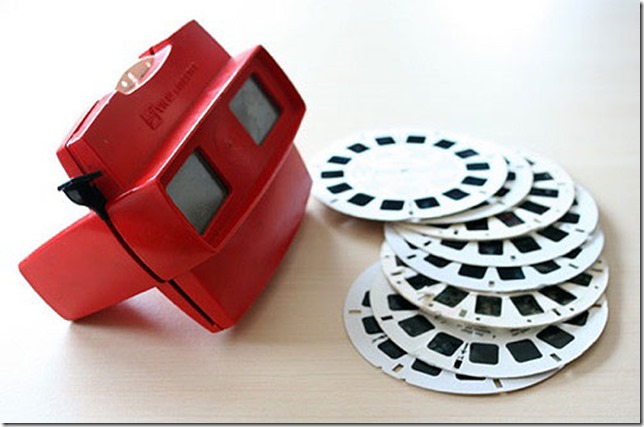
The HoloLens display is basically a set of transparent screens placed just in front of the eyes. Each eyepiece or screen lets light through and also shows digital content the way your monitor does. Each screen shows a slightly different image to create a stereoscopic illusion like the View Master toy does or 3D glasses do at 3D movies.

A few years ago I worked with transparent screens created by Samsung that were basically just LCD screens with their backings removed. LCDs work by suspending liquid crystals between layers of glass. There are two factors that make them bad candidates for augmented reality head mounts. First, they require soft backlighting in order to be reasonably useful. Second, and more importantly, they are too thick.

At this level of granularity, we can say that HoloLens works by using a light-weight material that displays color images while at the same time letting light through the displays. For fun, let’s call this sort of display an augmented reality combiner, since it combines the light from digital images with the light from the real world passing through it.


Intermediate Level Explanation

Light from the real world passes through two transparent pieces of plastic. That part is pretty easy to understand. But how does the digital content get onto those pieces of plastic?

Optical-Fibers

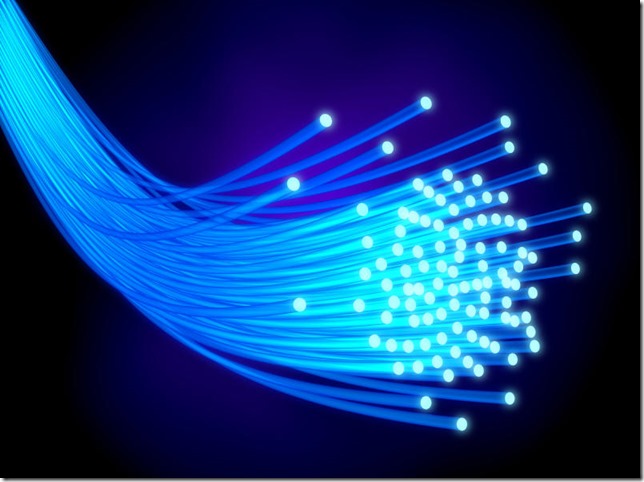
The magic concept here is that the displays are waveguides. Optical fiber is an instance of a waveguide we are all familiar with. Optical fiber is a great method for transferring data over long distances because is is lossless, bouncing light back and forth between its reflective internal surfaces.

hl_display_diagram

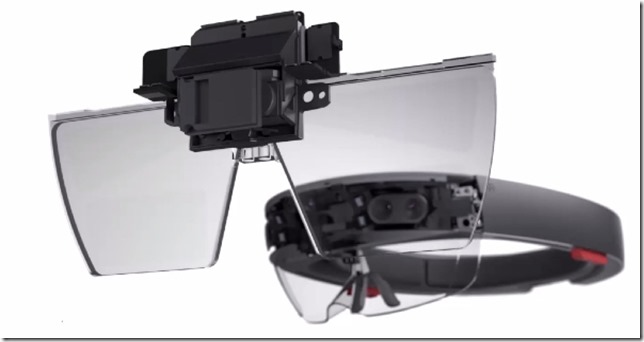
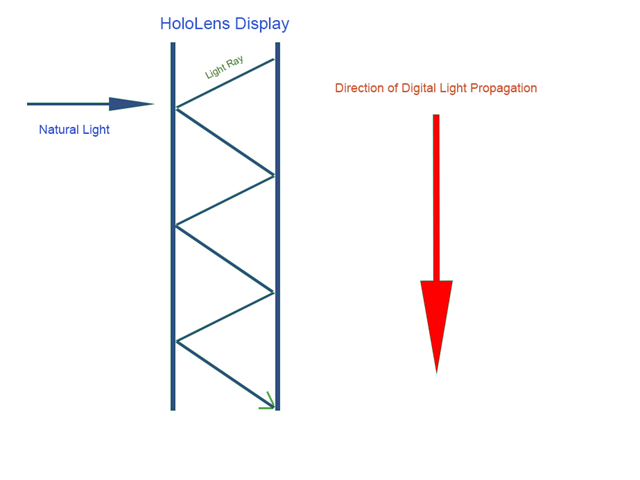
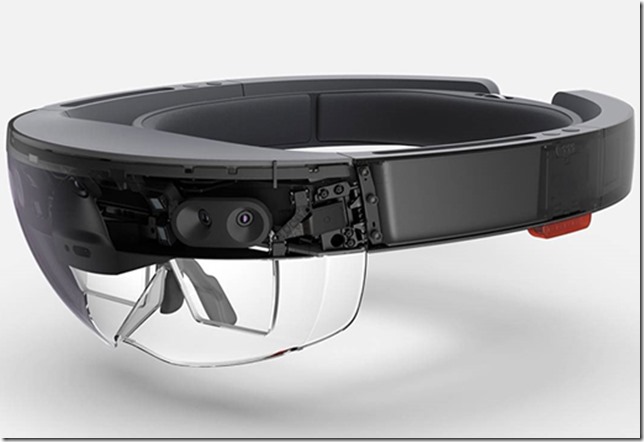
The two HoloLens eye screens are basically flat optical fibers or planar waveguides. Some sort of image source at one end of these screens sends out RGB data along the length of the transparent displays. We’ll call this the image former. This light bounces around the internal front and back of each display and in this manner traverses down its length. These light rays eventually get extracted from the displays and make their way to your pupils. If you examine the image of the disassembled HoloLens at the top, it should be apparent that the image former is somewhere above where the bridge of your nose would go.


Low Level Explanation

The lowest level is where much of the controversy comes in. In fact, it’s such a low level that many people don’t realize it’s there. And when I think about it, I pretty much feel like I’m repeating dialog from a Star Trek episode about dilithium crystals and quantum phase converters. I don’t really understand this stuff. I just think I do.

In the field of augmented reality, there are two main techniques for extracting light from a waveguide: holographic extraction and diffractive extraction. A holographic optical element has holograms inside the waveguide which route light into and out of the waveguide. Two holograms can be used at either end of the microdisplay: one turns the originating image 90 degrees from the source and sends it down the length of the waveguide. Another intercepts the light rays and turns them another ninety degrees toward the wearer’s pupils.

A company called TruLife Optics produces these types of displays and has a great FAQ to explain how they work. Many people, including Oliver Kreylos who has written quite a bit on the subject, believe that this is how the HoloLens microdisplays work. One reason for this is Microsoft’s emphasis on the terms “hologram” and “holographic” to describe their technology.

On the other hand, diffractive extraction is a technique pioneered by researchers at Nokia – for which Microsoft currently owns the patents and research. Due to a variety of reasons, this technique falls under the semantic umbrella of a related technology called Exit Pupil Expansion. EPE literally means making an image bigger (expanding it) so it covers as much of the exit pupil as possible, which means your eye plus every area your pupil might go to as you rotate your eyeball to take in your field of view (about a 10mm x 8mm rectangle or eye box). This, in turn, is probably why measuring the interpupillary distance is a large aspect of fitting people for the HoloLens.

ASPEimage002

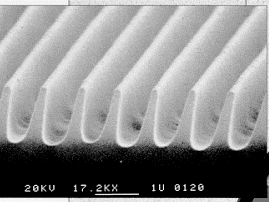
Nanometer wide structures or gratings are placed on the surface of the waveguide at the location where we want to extract an image. The grating effectively creates an interference pattern that diffracts the light out and even enlarges the image. This is known as SRG or surface relief grating as shown in the above image from holographix.com.

Reasons for believing HoloLens is using SRG as its way of doing EPE include the Nokia connection as well as this post from Jonathan Lewis, the CEO of TruLife, in which Lewis states following the original HoloLens announcement that it isn’t the holographic technology he’s familiar with and is probably EPE. There’s also the second edition of Woodrow Barfield’s Wearable Computers and Augmented Reality in which Barfield seems pretty adamant that diffractive extraction is used in HoloLens. Being a professor at the University of Washington, which has a very good technology program as well as close ties to Microsoft, he may know something about it.

On the other hand, it doesn’t get favored or disfavored in this Microsoft patent clearly talking about HoloLens that ends up discussing both volume holograms (VH) as well as surface relief grating (SRG). I think HL is more likely to be using diffractive extraction rather than holographic extraction, but it’s by no means a sure thing.


Impact oN Field of View

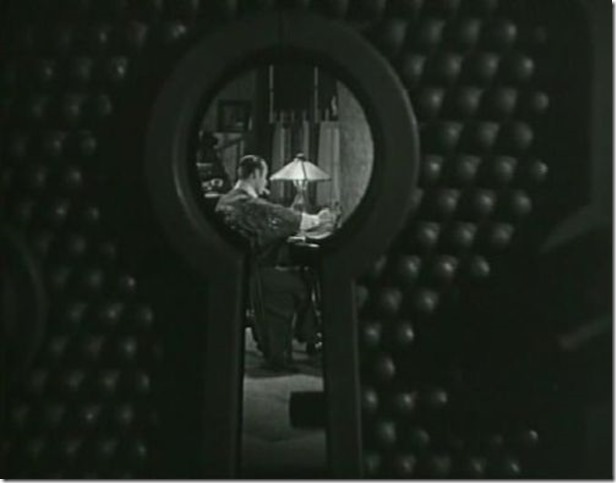
An important aspect of these two technologies is that they both involve a limited field of view based on the ways we are bouncing and bending light in order to extract it from the waveguides. As Oliver Kreylos has eloquently pointed out, “the current FoV is a physical (or, rather, optical) limitation instead of a performance one.” In other words, any augmented reality head mounted display (HMD) or near eye display (NED) is going to suffer from a small field of view when compared to virtual reality devices. This is equally true of the currently announced devices like HoloLens and Magic Leap, the currently available AR devices like those by Vuzix and DigiLens, and the expected but unannounced devices from Google, Facebook and Amazon.  Let’s call this the keyhole problem (KP).

keyhole

The limitations posed by KP are a direct result of the need to use transparent displays that are actually wearable. Given this, I think it is going to be a waste of time to lament the fact that AR FOVs are smaller than we have been led to expect from the movies we watch. I know Iron Man has already had much better AR for several years with a 360 degree field of view but hey, he’s a superhero and he lives in a comic book world and the physical limitations of our world don’t apply to him.

Instead of worrying that tech companies for some reason are refusing to give us better augmented reality, it probably makes more sense to simply embrace the laws of physics and recognize that, as we’ve been told repeatedly, hard AR is still several years away and there are many technological breakthroughs still needed to get us there (let’s say five years or even “in the Windows 10 timeframe”).

In the meantime, we are being treated to first generation AR devices with all that the term “first generation” entails. This is really just as well because it’s going to take us a lot of time to figure out what we want to do with AR gear, when we get beyond the initial romantic phase, and a longer amount of time to figure out how to do these experiences well. After all, that’s where the real fun comes in. We get to take the next couple of years to plan out what kinds of experiences we are going to create for our brave new augmented world.

Terminator Vision

terminator70

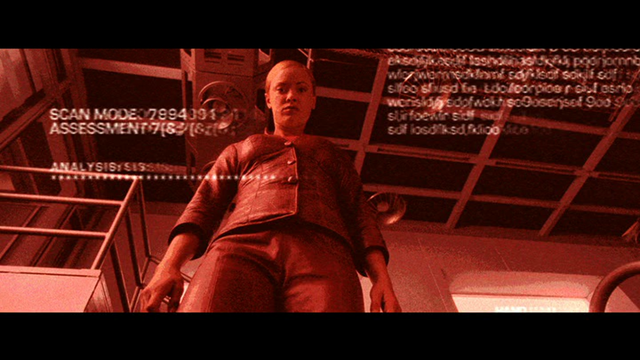
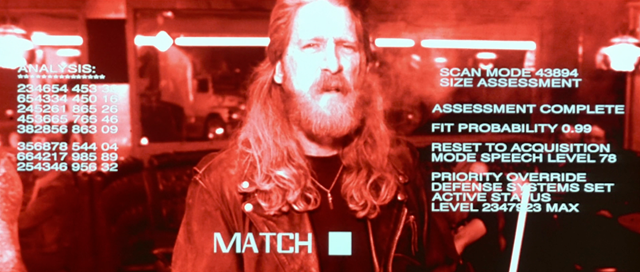
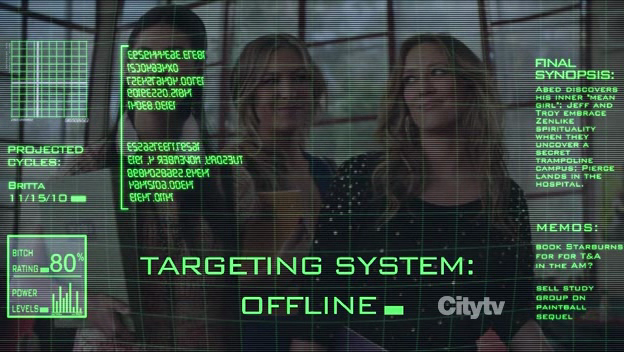
James Cameron’s film The Terminator introduced an interesting visual effect that allowed audiences to get inside the head and behind the eyes of the eponymous cyborg. What came to be called terminator vision is now a staple of science fiction movies from Robocop to Iron Man. Prior to The Terminator, however, the only similar robot-centric perspective shot seems to have been in the 1973 Yul Brynner thriller Westworld. Terminator vision is basically a scene filmed from the T-800’s point-of-view. What makes the terminator vision point-of-view style special is that the camera’s view is overlaid with informatics concerning background data, potential dialog choices, and threat assessments.

termdialog

But does this tell us anything about how computers actually see the world? With the suspension of disbelief typically required to enjoy science fiction, we can accept that a cyborg from the future would need to identify threats and then have contingency plans in case the threat exceeds a certain threshold. In the same way, it makes sense that a cyborg would perform visual scans and analysis of the objects around him. What makes less sense is why a computer would need an internal display readout. Why does the computer that performs this analysis need to present the data back to itself to read on its own eyeballs?

terminator_vision

Looked at from another way, we might wonder how the T-800 processes the images and informatics it is displaying to itself inside the theater of its own mind. Is there yet another terminator inside the head of the T-800 that takes in this image and processes it? Does the inner terminator then redisplay all of this information to yet another terminator inside its own head – an inner-inner terminator? Does this epiphenomenal reflection and redisplaying of information go on ad infinitum? Or does it make more sense to simply reject the whole notion of a machine examining and reflecting on its own visual processing?

robocop

I don’t mean to set up terminator vision as a straw man in this way just so I can knock it down. Where terminator vision falls somewhat short in showing us how computers see the world, it excels in teaching us about how we human beings see computers. Terminator vision is so effective as a story telling trope because it fills in for something that cannot exist. Computers take in data, follow their programming, perform operations and return results. They do not think, as such. They are on the far side of an uncanny valley, performing operations we might perform but more quickly and without hesitation. Because of this, we find it reassuring to imagine that computers deliberate in the same way we do. It gives us pleasure to project our own thinking processes onto them. Far from being jarring, seeing dialog options appear on Arnold Schwartzenegger’s inner vidscreen like a 1990’s text-based computer game is comforting because it paves over the uncanny valley between humans and machines.

Virtual Names for Augmented Reality (Or Why “Mixed-Reality” is a Bad Moniker)

dog_tview

It’s taken about a year but now everyone who’s interested can easily distinguish between augmented reality and virtual reality. Augmented reality experiences like the one provided by HoloLens combine digital and actual content. Virtual reality experiences like that provided by Oculus Rift are purely digital experiences. Both have commonalities such as stereoscopy, head tracking and object positioning to create the illusion that the digital objects introduced into a user’s field of view have a physical presence and can be walked around.

Sticklers may point out that there is a third kind of experience called a head-up display in which informatics are displayed at the top corner of a user’s field of view to provide digital content and text. Because head-up display devices like the now passe Google Glass do not overlay digital content on top of real world content, but instead displays them more or less side-by-side, it is not considered augmented reality.

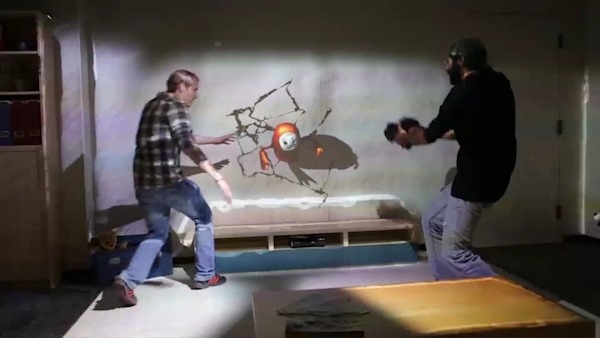
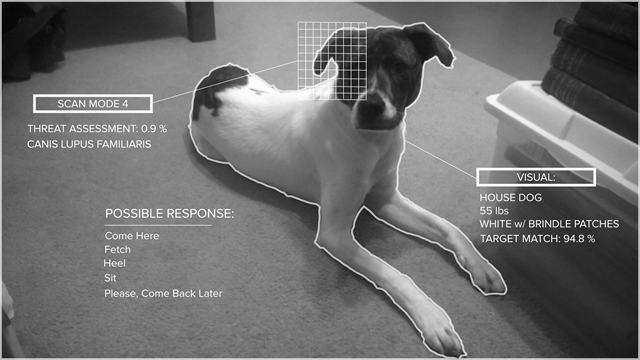
Even with augmented reality, however, a distinction can be drawn between informational content and digital content made up of 3D models. The informational type of augmented reality, as in the picture of my dog Marcie above, is often called the Terminator view, after the first-person (first-cyborg?) camera perspective used as a story telling device in the eponymous movie. The other type of augmented reality content has variously been described inaccurately as holography by marketers or, more recently, mixed reality.

The distinction is being drawn largely to distinguish what might be called hard AR from the more typical 2D overlays on smart phones that help you find a pizza restaurant. Mixed reality is a term intended to emphasize the point that not all AR is created equal.

Abandoning the term “augmented reality” in favor of “mixed reality” to describe HoloLens and Magic Leap, however, seems a bit drastic and recalls Gresham’s Law, the observation that bad money drives out good money. When the principle is generalized, as Albert Jay Knock did in his brilliant autobiography Memoirs of a Superfluous Man, it simply means that counterfeit and derivative concepts will drive out the authentic ones.

This is what appears to be happening here. Before the advent of the iPhone, researchers were already working on augmented reality. The augmented reality experiences they were building, in turn, were not Terminator vision style. Early AR projects like KARMA from 1992 were like the type of experiences that are now being made possible in Redmond and Hollywood, Florida. Terminator vision apps only came later with the mass distribution of smart phones and the fact that flat AR experiences are the only type of AR those devices can support.

I prefer the term augmented reality because it contains within itself a longer perspective on these technologies. Ultimately, the combination of digital and real content is intended to uplift us and enhance our lives. If done right, it has the ability to re-enchant everyday life. Compared to those aspirations, the term “mixed reality” seems overly prosaic and fatally underwhelming.

I will personally continue to use the moniker “mixed reality” as a generic term when I want to talk about both virtual reality and augmented reality as a single concept. Unless the marketing juggernaut overtakes me, however, I will give preference to the more precise and aspirational term “augmented reality” when talking about HoloLens, Magic Leap and cool projects like RoomAlive.

The Mvp Program REORG Explained Through Gamification

Today chief Microsoft evangelist Steve Guggenheimer announced dramatic changes to the MVP program on his blog.

summit

In case you are unfamiliar with the MVP program, it is a recognition Microsoft gives to members of the developer community and is generally understood as a mark of expertise in a particular Microsoft technology (e.g. Windows Phone, Outlook, Kinect for Windows). In truth, though, there are many ways to get the MVP recognition without necessarily being an expert in any particular technology and running user groups or helping at coding events are common ways.  The origins of the program go back to the days when it was given out for answering forum questions about Microsoft technologies. This is a good way to understand the program – it is a reward of sorts for people who are basically helping their communities out as well as helping Microsoft out. Besides the status conferred by the award, the MVP includes an annual subscription to MSDN and an annual invitation to the Redmond campus for the MVP summit. Depending on the discipline as well as marketing cycles, you may also have access to regular calls with particular product teams. MVPs also have to renew every year by explaining what they’ve done in the prior 12 months to help the developer, IT or consumer community.

As with any sort of status thingy that confers a sense of self-worth and may even affect income, it is occasionally a source of turmoil, stress and drama for people. Like soccer mom levels of drama. For instance, occasionally a product category like Silverlight will just disappear and that particular discipline has to be scrapped. The people who are Silverlight MVPs will typically feel hurt by this and understandably feel slighted.  They didn’t become suddenly unworthy, after all, simply because the product they had poured so much energy into isn’t around anymore.

Some products are hot and some are not, while others start off hot then become not. If you were one of those Silverlight MVPs, you probably would like to point out that you are in fact worthy and know lots of other things but had been ignoring other technical interests in order to promote just Silverlight. You probably would feel that it is unjust to be punished for overinvesting in one technology.

In response to situations such as this, the Microsoft MVP program is undergoing a re-organization.

I’ll quote the synoptic statement from Steve’s post:

Moving forward, the MVP Award structure will shift to encompass the broad array of community contributions across technologies. For our Developer and IT Pro oriented MVPs, we’re moving from 36 areas of technical expertise to a set of 10 broader categories that encompass a combined set of 90 technology areas—including open source technologies.

dandd

The best most fun way to understand this is in terms of Dungeons & Dragons. To do so it is important that I first try to explain the difference between class-based role playing games and skills-based RPGs. Diablo is a great example of a class-based RPG. You choose from a handful of classes like barbarian, demon hunter or monk, and based on that your skills are pretty much picked out for you. At the opposite extreme is a game like Fallout where you have full control over how to upgrade your abilities; the game doesn’t prescribe how you should play at all. In the middle are RPGs like World of Warcraft which has cross-class skills but also provides a boost to certain skills depending on what class you initially choose. Certain class/skill combinations are advisable, but none are proscribed. You have freedom to play the game the way you want – for instance as an elf hunter with mutton chops and a musket. Totally do-able.

Dungeons & Dragons is a game that changes its rules every so often and causes lots of consternation whenever it does so. One of the corrections happened between D&D 3.0 and D&D 3.5 when the game went from a simplified class-based system to a more open skills based system. This allowed players a lot more freedom in how they customized their characters who could now gain skills that aren’t traditionally tied to their class.

The MVP program is undergoing the same sort of correction, moving from a class-based gaming system to a skills-based gaming system. Instead of just being a Silverlight MVP, you can now be an fifth-level druid with Javascript and handle animals skills, or a third-level Data Platform MVP with interests in IoT,  Azure machine learning, alchemy, light armor and open lock. You can customize the MVP program to fit your style of play rather than letting the program prescribe what sort of tech things you need to be working on.

This, I believe, will help meliorate the problem of people basing their self-worth on a fixed idea of what their MVP-ness means or the bigger problem of comparing their MVP-ness to the MVP-nesses of others. Going forward, one’s MVP-ness is whatever one makes of it. And that’s a good thing.

The Next Big Thing in Depth Sensors

eqshwvu471ixmutrnw8f

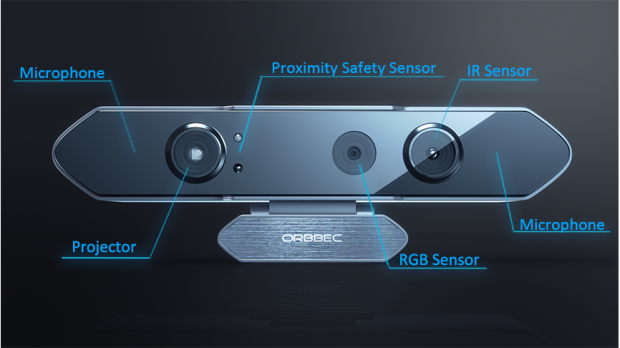
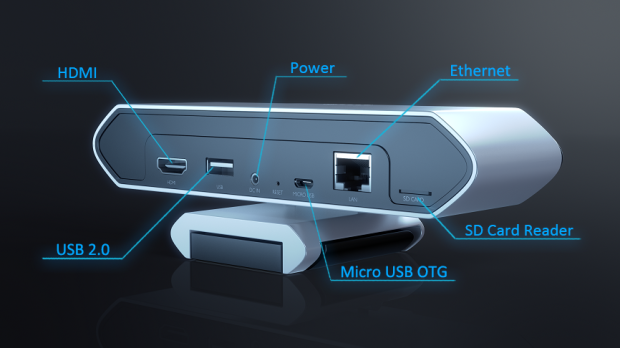
Today Orbbec3D, my employer, announced a new depth sensor called the Orbbec Persee. We are calling it a camera-computer because instead of attaching a sensor to a computer, we’ve taken the much more reasonable approach of putting the computer inside our sensor. It’s basically a 3D camera that doesn’t require a separate computer hooked up to it because it has its own onboard CPU while maintaining a small physical footprint. This is the same sort of move being made by products like the HoloLens. 

Unlike the Oculus Rift which requires an additional computer or Google Glass which needs a CPU on a nearby smartphone, the Persee falls into a category of devices that perform their own computing and that you can program as well as load pre-built software on.

For retail scenarios like advanced proximity detection or face recognition, this means compact installations. One of the major difficulties with traditional “peripheral” cameras is placing computers in such a way that they stay hidden while also allowing for air circulation and appropriate heat dissipation. Having done this multiple times, I can confirm that this is a very tricky problem and typically introduces multiple points of failure. The Persee removes all those obstacles and allows for sleek fabricated installs at a great price.

What has me truly excited about the Persee is Orbbec’s efforts to cater to the creative coding community and the way that the creative community has taken to it. These people are my heroes and having them give our product the nod means the world to me. People like Golan Levin, Phoenix Perry, Kyle McDonald, James George, Greg Borenstein, and Elliot Woods.

The device is OpenNI compatible but also provides it’s own middleware to add new capabilities and fill both creative and commercial needs (<– this is the part I’m working on).

ioeupub9kwj7pwo5pjdx

Is it a replacement for Kinect? In my opinion, not really because they do different things. The Kinect will always be my first love and is the full package, offering high-rez video, depth and a 3D mic. It is primarily a gaming peripheral. The Orbbec Persee fills a very different niche and competes with devices like the Asus Xtion and Intel RealSense as realtime collectors of volumetric data – in the way your thermometer collects thermal data. What distinguishes the Persee from its competitors is that it is an intelligent device and not just a mere peripheral. It is a first class citizen in the Internet of Things — to invoke magical marketing thinking – where each device in the web of intelligent objects not only reports its status but also reflects, processes and adjusts its status. It’s the extra kick that makes the Internet of Things not just a buzzword, but also a step along the path toward non-Skynet hard AI. It’s the next big thing.

Ceci n’est pas une pipe bombe

homemade_clock

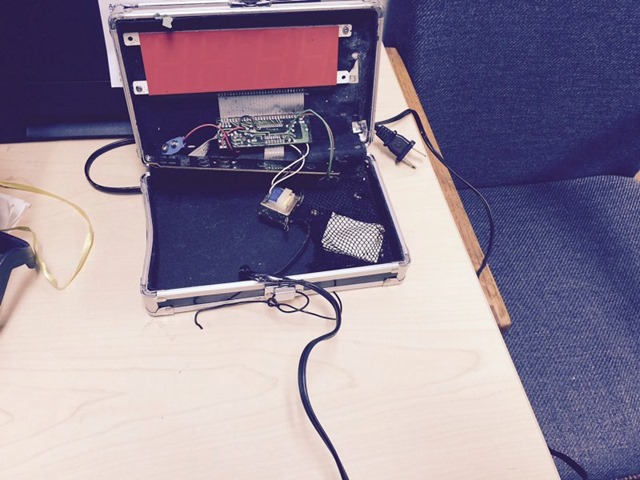
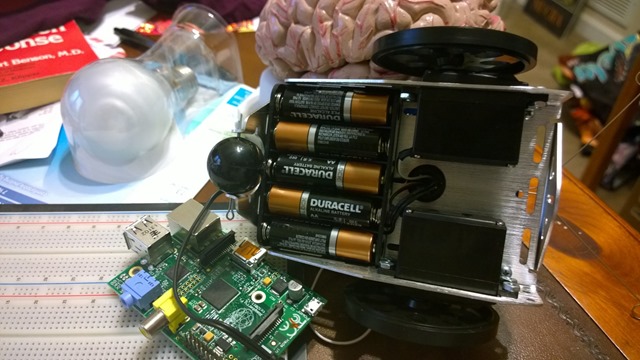
This is the picture of the homemade clock Ahmed Mohamed brought to his Irving, Texas high school. Apparently no one ever mistook it for a bomb, but they did suspect that it was made to look like a bomb and so they dragged the hapless boy off in handcuffs and suspended him for three days.

This is a strange case of perception versus reality in which the virtual bomb was never mistaken for a real bomb. Instead, what was identified was the fact that it was, in fact, only a bomb virtually and, as with all things virtual, therefore required some sort of explanation.

The common sympathetic explanation is that this isn’t a picture of a virtual bomb at all but rather a picture of a homemade clock. Ahmed recounts that he made the clock, in maker fashion, in order to show an engineering teacher because he had done robotics in middle school and wanted to get into a similar program in high school. Homemade clocks, of course, don’t require an explanation since they aren’t virtually anything other than themselves.

MagrittePipe

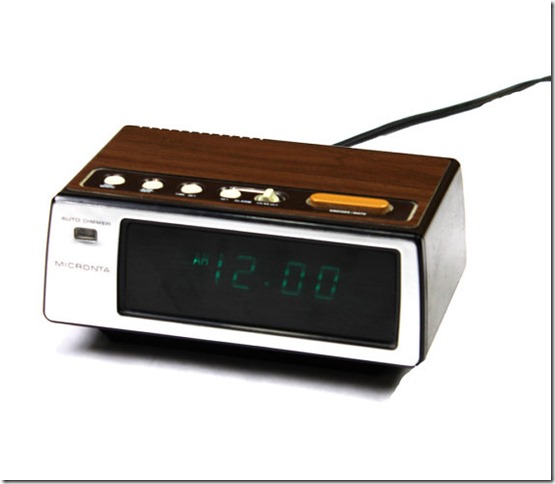
It turns out, however, that the picture at the top does not show a homemade maker clock. Various engineering types have examined the images and determined that it is in fact a disassembled clock from the 80’s.

The telling aspect is the DC power cord which doesn’t actually get used in homemade projects. Instead, anyone working with arduino projects typically (pretty much always) uses AA batteries. The clock components have also been tracked back to their original source, however, so the evidence seems pretty solid.

battery

The photo at the top shows not a virtual bomb nor a homemade clock but, in fact, a virtual homemade clock. That is, it was made to look like a homemade clock but was mistakenly believed to be something made to look like a homemade bomb.

[As a disclaimer about intentions, which is necessary because getting on the wrong side of this gets people in trouble, I don’t know Ahmed’s intentions and while I’m a fan of free speech I can’t say I actually believe in free speech having worked in marketing and I think Ahmed Mohammed looks absolutely adorable in his NASA t-shirt and I have no desire to be placed in company with those other assholes who have shown that this is not a real homemade clock but rather a reassembled 80’s clock and therefore question Ahmed’s motives whereas I refuse to try to get into a high schooler’s head, having two of my own and knowing what a scary place that can be … something, something, something … and while I can’t wholeheartedly support every tweet made by Richard Dawkins and have at times even felt in mild disagreement with things he and others have tweeted on twitter I will say that I find his book The Selfish Gene a really good read … etc, etc, … and for good measure fuck you FoxNews.]


micronta

The salient thing for me is that we all implicitly know that a real bomb isn’t supposed to look like a bomb. The authorities at Ahmed’s high school knew that immediately. Bombs are supposed to look like shoes or harmless tourist knickknacks. If you think it looks like a bomb, it obviously isn’t. So what does it mean to look like a bomb (to be virtually a bomb) but not be an actual bomb?

banana_tape

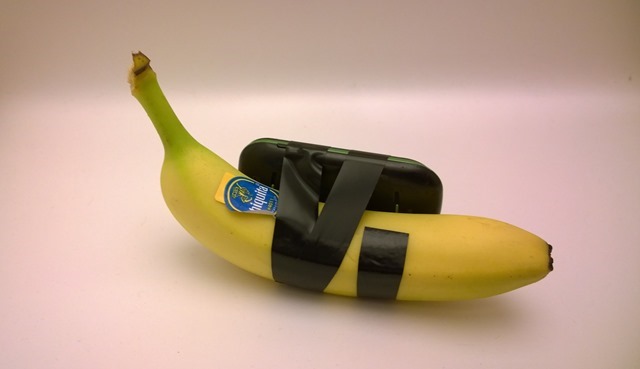
I covered similar territory once before in a virtual exhibit called les fruits dangereux and at the time concluded that virtual objects, like post-modern novels, involve bricolage and the combining of disparate elements in unexpected ways. For instance combining phones, electrical tape and fruit or combining clock parts and pencil cases. Disrupting categorical thinking at a very basic level makes people – especially authority people – suspicious and unhappy.

Which gets us back to racism which is apparently what has happened to Ahmed Mohammed who was led out of school in handcuffs in front of his peers – and we’re talking high school! and he wasn’t asking to be called “McLovin.” It’s pretty cruel stuff. The fear of racial mixing (socially or biologically) always raises it’s head and comes from the same desire to categorize people and things into bento box compartments. The great fear is that we start to acknowledge that we live in a continuum of types rather than distinct categories of people, races and objects. In the modern age, mass production makes all consumer objects uniform in a way that artisanal objects never were while census forms do the same for people.

Virtual reality will start by copying real world objects in a safe way. As with digital design, it will start with isomorphism to make people feel safe and comfortable. As people become comfortable, bricolage will take hold simply because, in a digital world rather than a commoditized/commodified world, mashups are easy. Irony and a bit of subversiveness will lead to bricolage with purpose as we find people’s fantasies lead them to combine digital elements in new and unexpected ways.

We can all predict augmented and virtual ways to press a digital button or flick through a digital menu projected in front of us in order to get a virtual weather forecast. Those are the sorts of experiences that just make people bored with augmented reality vision statements.

hieronymus.63a

The true promise of virtual reality and augmented reality is that they will break down our racial, social and commodity thinking. Mixed-reality has the potential to drastically change our social reality. How do social experiences change when the color of a person’s avatar tells you nothing real about them, when our social affordances no longer provide clues or shortcuts to understanding other people? In a virtual world, accents and the shoes people wear no longer tell us anything about their educational background or social status. Instead of a hierarchical system of discrete social values, we’ll live in a digital continuum.

That’s the sort of augmented reality future I’m looking forward to.

The important point in the Ahmed Mohammed case, of course, is that you shouldn’t arrest a teenager for not making a bomb.

The Problem with Comparing Depth Camera Resolutions

We all want to have an easy way to compare different depth cameras to one another. Where we often stumble in comparing depth cameras, however, is in making the mistake of thinking of them in the same way we think of color cameras or color displays.

When we go to buy a color television or computer monitor, for instance, we look to the pixel density in order to determine the best value. A display that supports 1920 by 1080 has roughly 2.5 times the pixel density of a 1280 by 720 display. The first is considered high definition resolution while the second is commonly thought of as standard definition. From this, we have a rule of thumb that HD is 2.5 times denser than SD. With digital cameras, we similarly look to pixel density in order to compare value. A 4 megapixel camera is roughly twice as good as a 2 megapixel camera, while an 8 MP camera is four times as good. There are always other factors involved, but for quick evaluations the pixel density trick seems to work. My phone happens to have a 41 MP camera and I don’t know what to do with all those extra megapixels – all I know is that it is over 20 times as good as that 2 megapixel camera I used to have and that makes me happy.

When Microsoft’s Kinect 2 sensor came out, it was tempting to compare it against the Kinect v1 in a similar way: by using pixel density. The Kinect v1 depth camera had a resolution of 320 by 240 depth pixels. The Kinect 2 depth camera, on the other hand, had an increased resolution of 512 b 424 depth pixels. Comparing the total depth pixels provided by the Kinect v1 to the total provided by the Kinect 2: 76,800 vs 2, 217,088, many people arrived at the conclusion that the Kinect 2’s depth cameras was roughly three times better than the Kinect v1’s.

Another feature of the Kinect 2 is a greater field of view for the depth camera. Where the Kinect v1 has a field of view of 57 degrees by 43 degrees, the Kinect 2 has a 70 by 60 degree field of view. The new Intel RealSense 3D F200 camera, in turn, advertises an improved depth resolution of 480 by 360 degrees with an increased field of view of roughly 90 degrees by 72 degrees.

What often gets lost in these feature comparisons is that our two different depth camera attributes, resolution and field of view, can actually affect each other. Increased pixel resolution is only really meaningful if the field of view stays the same between different cameras. If we increase the field of view, however, we are in effect diluting the resolution of each pixel by trying to stuff more of the real world into the pixels we already have.

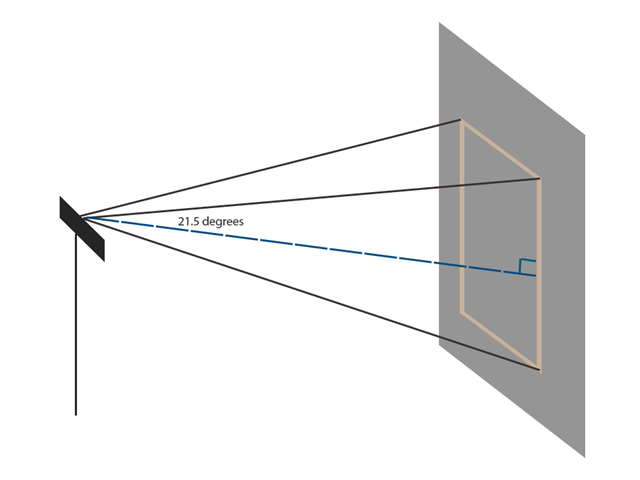
It turns out that 3D math works slightly differently from regular 2D math. To understand this better, imagine a sheet of cardboard held a meter out in front of each of our two Kinect sensors. How much of each sheet is actually caught by the Kinect v1 and the Kinect 2?

measurement

To derive the area of the inner rectangle captured by the Kinect v1 in the diagram above, we will use a bit of trigonometry. The field of view of the Kinect v1 is 58.5 degrees horizontal by 46.6 vertical. To get good angles to work with, however, we will need to bisect these angles. For instance, half of 46.6 is 23.3. The tangent of 21.5 degrees times the 1 meter hypotenuse (since the cardboard sheet is 1 M away) gives us an opposite side of .39 meters. Since this is only half of that rectangle’s side (because we bisected the angle) we multiply by two to get the full vertical side which is .78 meters. Using the same technique for the horizontal field of view, we capture a horizontal side of 1.09 meters.

Using the same method for the sheet of cardboard in front of the Kinect 2, we discover that the Kinect 2 captures a rectangular surface that is 1.4 meters by 1.14 meters. If we now calculate the area on the cardboard sheets in front of each camera and divide by each camera’s resolution, we discover that far from being three times better than the Kinect v1, each pixel caught by the Kinect 2 depth camera holds 1.5 times as much of the real world as each pixel of the Kinect v1. It is still a better camera, but not what one would think by comparing resolutions alone.

This was actually a lot of math in order to make a simple and mundane point: it all depends. Depth pixel resolutions do not tell us everything we need to know when comparing different depth cameras. I invite the reader to compare the true density of the RealSense 3D camera to the Kinect 2 or Xtion Pro Live camera if she would like.

On the other hand, it might be worth considering the range of these different cameras. The RealSense F200 cuts off at about a meter whereas the Kinect cameras only start performing really well at about that distance. Another factor is, of course, the accuracy of the depth information each camera provides. A third factor is whether one can improve the performance of a camera by throwing on more hardware. Because the Kinect 2 is GPU bound, it will actually work better if you simply add a better graphics card.

For me, personally, the most important question will always be how good the SDK is and how strong the community around the device is. With good language and community support, even a low quality depth camera can be made to do amazing things. An extremely high resolution depth camera with a weak SDK, alternatively, might in turn make a better paperweight than a feature forward technology solution.

[I’d like to express my gratitude to Kinect for Windows MVPs Matteo Valoriani and Vincent Guigui for introducing me to this geometric bagatelle.]

HoloLens Fashionista

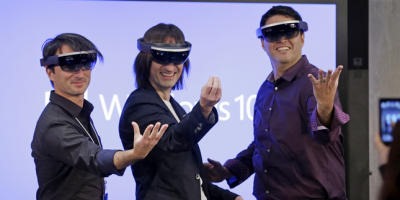
microsoft-executives-testing-the-hololens

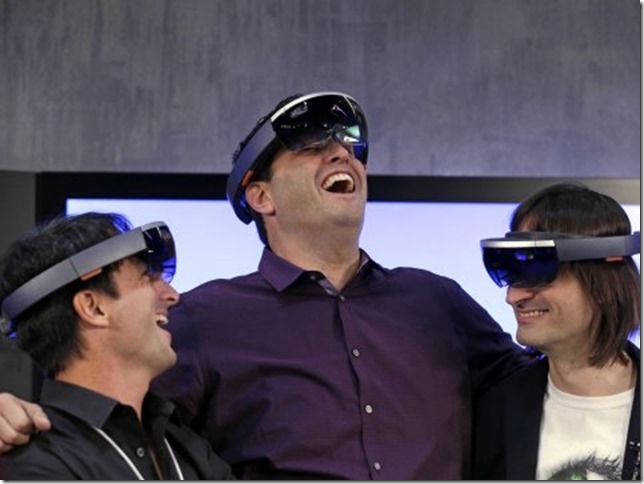
While Google Glass certainly had its problems as an augmented reality device – among other things not really being an augmented reality device as GA Tech professor Blair MacIntyre pointed out – it did demonstrate two remarkable things. First, that people are willing to shell out $1500 for new technology. In the debates over the next year concerning the correct price point for VR and AR head mounted displays, this number will play a large role. Second, it demonstrated the importance of a sense of style when designing technology. Google glass, for many reasons, was a brilliant fashion accessory.

If a lesson can be drawn from these two data points, it might be that new — even Project Glass-level iffy — technology can charge a lot if it manages to be fashionable as well as functional.

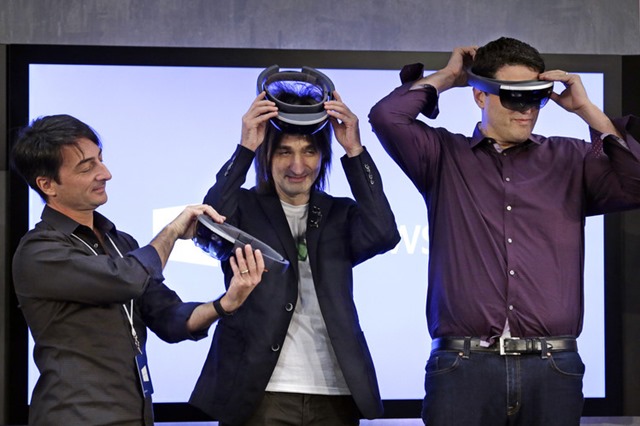
When you look at the actual HoloLens device, you may, like me, be thinking “I don’t know if I’d wear that out in public.” In that regard, I’d like to nudge your intuitions a bit.

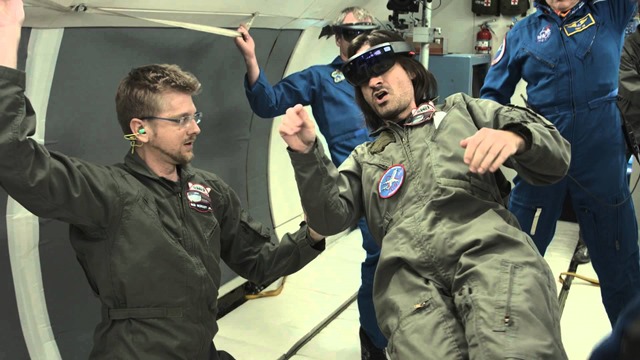
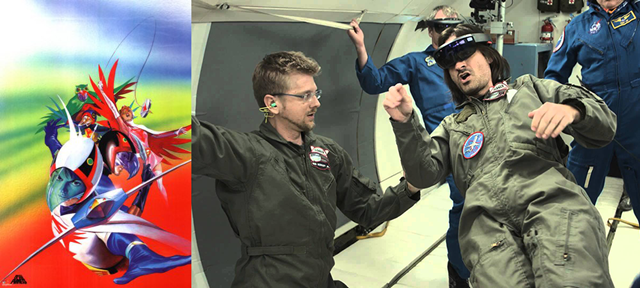
Obviously there is time to do some tweaking with the HL design. I recently found some nostalgic pictures online that made me start to think that with modifications, I could rock this look.

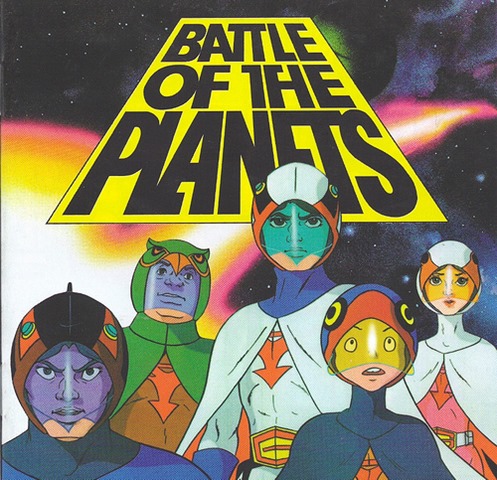
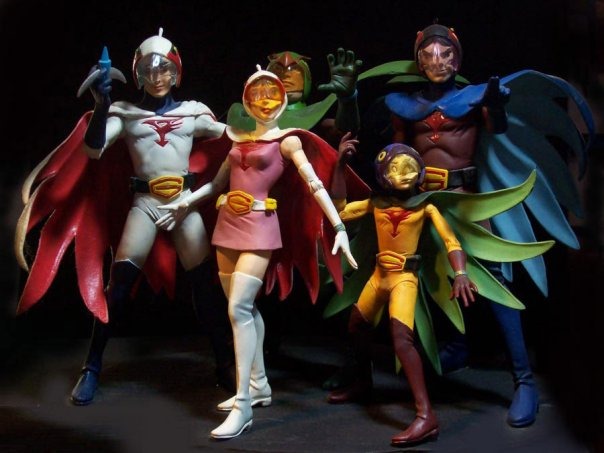
It all revolves around one of the first animes imported to the United States in the 70s called Battle of the Planets. It sounded like this:

Battle of the Planets! G-Force! Princess! Tiny! Keyop! Mark! Jason! And watching over them from Center Neptune, their computerized coordinator, 7-Zark-7! Watching, warning against surprise attacks by alien galaxies beyond space. G-Force! Fearless young orphans, protecting Earth’s entire galaxy. Always five, acting as one. Dedicated! Inseparable! Invincible!


And it looked AMAZING. I think this look could work for HoloLens. I think I could pull it off. The capes and tights, of course, are purely optional.

3457571746_828ed63868

2033478-g_force_3

hololenss

battle_of_the_planets___mark_and_princess_by_mlcraighead-d4igfy3

battle_of_the_planets__g_force_by_gabrielxmarquez-d6vlr7u

battle_of_the_planets_by_dwinbotp

Microsoft Windows 10

d099db9b8e3471db5f3016fa0349a61d

gatchaman_01

b8bea9c9-1ca3-4c10-8d52-44d04b3062a2

battle-of-the-planets-poster-c10106337jpeg1

lensinspace

holo-force

Why Augmented Reality is harder than Virtual Reality

hololensx519_0

At first blush, it seems like augmented reality should be easier than virtual reality. Whereas virtual reality involves the generation of full stereoscopic digital environments as well as interactive objects to place in those environments, augmented reality is simply adding digital content to our view of the real world. Virtual reality would seem to be doing more heavy lifting.

perspective

In actual fact, both technologies are creating illusions to fool the human eye and the human brain. In this effort, virtual reality has an easier task because it can shut out points of reference that would otherwise belie the illusion. Augmented reality experiences, by contrast, must contend with real world visual cues that draw attention to the false nature of the mixed reality content being added to a user’s field of view.

In this post, I will cover some of the additional challenges that make augmented reality much more difficult to get right. In the process, I hope to also provide clues as to why augmented reality HMDs like HoloLens and Magic Leap are taking much longer to bring to market than AR devices like the Oculus Rift, HTC Vive and Sony Project Morpheus.
terminator vision

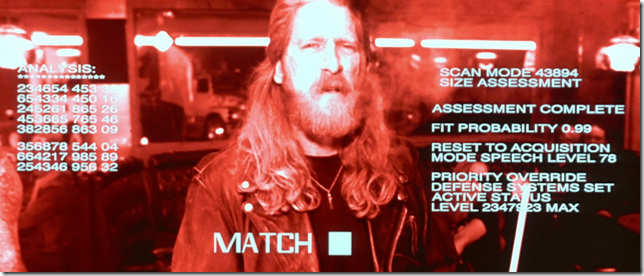
But first, it is necessary to distinguish between two different kinds of augmented reality experience. One is informatics based and is supported by most smart phones with cameras. The ideal example of this type of AR is the Terminator-vision from James Cameron’s 1984 film “The Terminator.” It is relatively easy to to do and is the most common kind of AR people encounter today.
star wars chess

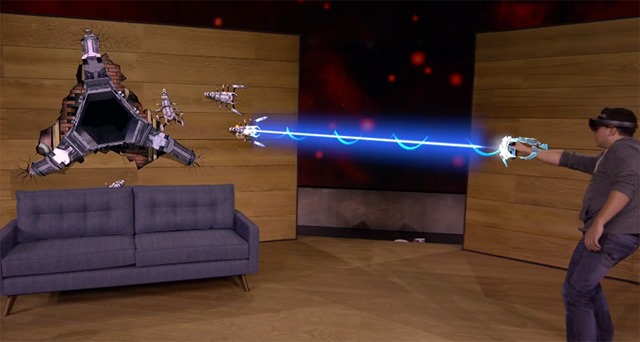
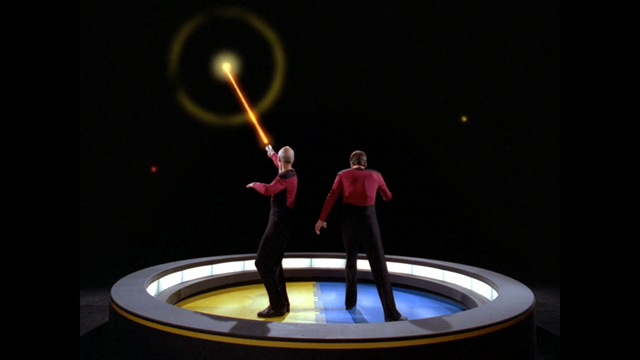
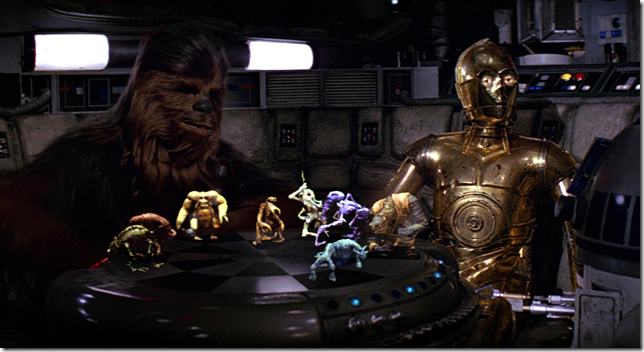
The second, and more interesting, kind of AR requires inserting illusory 3D digital objects (rather than informatics) into the world. The battle chess game from 1977’s “Star Wars” epitomizes this second category of augmented reality experience. This is extremely difficult to do.

The Microsoft HoloLens and Magic Leap (as well as any possible HMDs Apple and others might be working on) are attempts to bring both the easy type and the hard type of AR experience to consumers.

Here are a few things that make this difficult to get right. We’ll put aside stereoscopy which has already been solved effectively in all the VR devices we will see coming out in early 2016.

cloaked predator

1. Occlusion The human brain is constantly picking up clues from the world in order to determine the relative positions of objects such as shading, relative size and perspective. Occlusion is one that is somewhat tricky to solve. Occlusion is an effect that is so obvious that it’s hard to realize it is a visual cue. When one body is in our line of sight and is positioned in front of another body, that other body is partially hidden from our view.

In the case where a real world object is in front of a digital object, we can clip the digital object with an outline of the object in front to prevent bleed through. When we try to create the illusion that a digital object is positioned in front of a real world object, however, we encounter a problem inherent to AR.

In a typical AR HMD we see the real world through a transparent screen upon which digital content is either projected or, alternatively, illuminated as with LED displays. An obvious characteristic of this is that digital objects on a transparent display are themselves semi-transparent. Getting around this issue would seem to require being able to make certain portions of the transparent display more opaque than others as needed in order to make sure our AR objects look substantial and not ghostly.

 citizen kane

2. Accommodation It turns out that stereoscopy is not the only way our eyes recognize distance. The image above is from a scene in Orson Welles’s “Citizen Kane” in which a technique called “deep focus” is used extensively. Deep focus maintains clarity in the frame whether the actors and props are in the foreground, background or middle ground. Nothing is out of focus. The technique is startling both because it is counter to the way movies are generally shot but also because it is counter to how our eyes work.

If you cover one eye and use the other to look at one of your fingers, then move the finger toward and away from you, you should notice yourself refocusing on the finger as it moves while other objects around the finger become blurry. The shape of the cornea actually becomes more rounded when objects are close in order to cause light to refract more in order to reach the retina. For further away objects, the cornea flattens out because less refraction is needed. As we become older, the ability to bow the cornea lessens and we lose some of our ability to focus on near objects – for instance when we read. In AR, we are attempting to make a digital object that is really only centimeters from our eyes appear to be much further away.

Depending on how the light from the display passes through the eye, we may end up with the digital object appearing clear while the real world objects supposedly next to it and at the same distance appear blurred.
vergence_accomodation

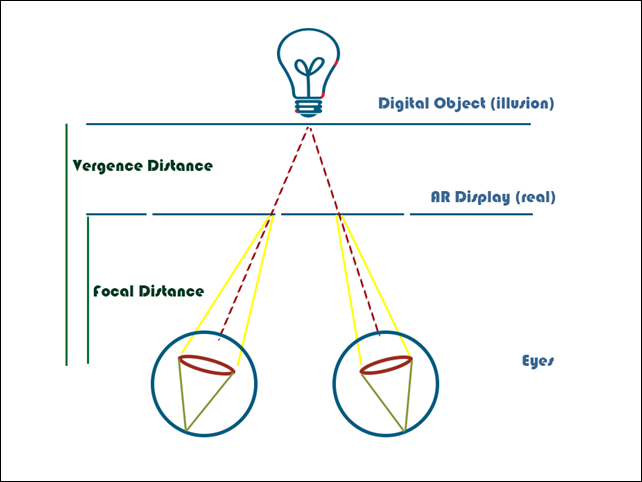
3. Vergence-Accommodation Mismatch The accommodation problem is one aspect of yet another VR/AR difficulty. The term vergence describes the convergence and divergence of the two eyes from one another as objects move closer or further away. An interesting aspect of stereoscopy – which is used both for virtual reality as well as augmented reality to create the illusion of depth – is that the distance at which the two eyes coordinate to see an object is generally different from the focal distance from the eyes to the display screen(s). This consequently sends two mismatched signals to the brain concerning how far away the digital object is supposed to be. Is it the focal length or the vergence length? Among other causes, vergence-accommodation mismatch is believed to be a contributing factor to VR sickness. Should the accommodation problem above be resolved for a given AR device, it is safe to assume that the vergence-accommodation mismatch will also be solved.

 4. Tetherless Battery Life Smart phones have changed our lives among other reasons because they are tetherless devices. While the current slate of VR devices all leverage powerful computers to which they are attached, since VR experiences are all currently somewhat stationary (the HTC Vive being the odd bird), AR needs to be portable. This naturally puts a strain on the battery, which needs to be relatively light since it will be attached to the head-mounted-display, but also long-lived as it will be powering occasionally intensive graphics, especially for games.

5. Tetherless GPU Another strain on the system is the capability of the GPU. Virtual reality devices can be fairly intense since they require the user to purchase a reasonably powerful and somewhat expensive graphics card. AR devices can be expected to have similar graphics requirements as VR with much less to work with since the GPU needs to be onboard. We can probably expect a streamlined graphics pipeline dedicated to and optimized for AR experiences will help offset lower GPU capabilities.

6. Applications Not even talking about killer apps, here. Just apps. Microsoft has released videos of several impressive demos including Minecraft for HoloLens. Magic Leap up to this point has only shown post-prod, heavily produced illustrative videos. The truth is that everyone is still trying to get their heads around designing for AR. There aren’t really any guidelines for how to do it or even what interactions will work. Other than the most trivial experiences (e.g. weather and clock widgets projected on a wall) this will take a while as we develop best practices while also learning from our mistakes.

Conclusion

With the exception of V-AM, these are all problems that VR does not have to deal with. Is it any wonder, then, that while we are being led to believe that consumer models of the Oculus Rift, HTC Vive and Sony Project Morpheus will come to market in the first quarter of 2016, news about HoloLens and Magic Leap has been much more muted. There is simply much more to get right before a general rollout. One can hope, however, that dev units will start going out soon from the major AR players in order to mitigate challenge #6 while further tuning continues, if needed, on challenges #1-#5.

Come hear me speak about Mixed Reality at Dragon Con 2015

 dragoncon_logo

I’ve been invited by the Robotics and Maker Track to speak about near future technologies at Dragon Con this year. While the title of the talk is “Microsoft Kinect and HoloLens,” I’ll actually be talking more broadly about 3D sensors like Kinect and the Orbbec Astra, Virtual Reality with the Oculus Rift and HTC Vive as well as Augmented Reality with HoloLens and Magic Leap. I will cover how these technologies will shape our lives and potentially change our world over the next five years.

I am honored to have been asked to be a panelist at Dragon Con on technology I am passionate about and that has been a large part of my life and work over the past several years.

I should add that being a panelist at Dragon Con is a nerd and fan’s freakin’ dream come true for me. Insanely so. Hopefully I’ll be able to stay cool enough to get through all the material I have on our collective sci fi future.

oculus

I will cover each technology and the devices coming out in the areas of 3D sensors, virtual reality and augmented reality. I’ll discuss their potential impact as well as some of their history. I’ll delve into some of the underlying technical and commercial challenges that face each. I’ll bring lots of Kinect and Oculus demos (not allowed to show HoloLens for now, unfortunately) and will also provide practical advice on how to experience these technologies as a consumer as well as a developer in 2016.

kinect

My panel is on Sunday, Sept 6 at 2:30 in Savannah rooms 1, 2 and 3 in the Sheraton. Please come say hi!

 holo