Two Days Till The Election

IMG_1415

The Sidecar is a somewhat neglected concoction, being a brandy-based cocktail that doesn’t fit into the common categories of brown, clear and beach drinks. The most important thing is to wet the tip of your martini glass with water before dipping it in sugar and chilling it in the freezer. To make a sidecar, shake:

  • 2 oz brandy
  • 2 oz triple sec or other orange liqueur
  • 1 1/2 oz fresh squeezed lemon juice

The base of a cocktail (brandy, whiskey, gin, vodka, rum or tequila) is a bit like a Kuhnian paradigm that casts an interpretive shadow over whatever else you add to it. If you add lime juice and simple syrup to rum you get a Daiquiri. When you add lime juice and simple syrup to gin, you end up with a Gimlet. Garnishes also provide a gravitational pull of their own. Dry vermouth, gin and olives gives you a martini. Dry vermouth, gin and cocktail onions makes a Gibson. Replace gin with vodka and you end up with either a vodka Martini or a vodka Gibson (emphasizing that vodka, being a clear alcohol like gin, is a mere variation rather than a species change). Gin, sweet vermouth and bitters gives you a Martinez, a drink that the Martini is apparently descended from. Bourbon, sweet vermouth and bitters is a Manhattan. Replace the Manhattan’s vermouth with simple syrup and you get an Old-Fashioned. Add mint leaves to this and you have a Mint Julep.

Herodotus tells us that the Persians always deliberated over important issues once drunk and once sober, to ensure they captured all the aspects of the matter with clarity but also with an open mind so that, matatis mutandis, good outcomes were achieved. The surprise is always in how different moods can affect our judgment which we otherwise assume is firm and built on unmoving principles. It is why decisions should never be made in haste or in a moment of high passion. And if we do this anyways, there is much to be said for a process that allows review, so that mistakes made in the moment can be fixed.

But due process, like brandy cocktails, is not currently in vogue, and it is difficult to tell if this is a result of changing perspectives on what justice entails – or if this is merely a momentary passion.

Three Days Out From Election Day


The White Russian is famously the drink of The Dude. It is a three ingredient cocktail composed of equal parts vodka, Kahlua and heavy white_russiancream. No garnish. I prefer it in an Oculus Rift novelty glass, but any old-fashioned glass will do.

My wife’s grand-parents and great-grandparents were White Russians. In the 1918 revolution her family retreated and retreated with the Tsarist forces through the Ukraine. Her great-great-grandfather and a cousin iconically died when their regiment was surrounded by the Reds in the snow. The Reds did not take prisoners. To be fair, the Whites didn’t either. And both took advantage of the war to act out pogroms on Jews, whom neither side trusted.

One of her great grand-fathers was sent to the Gulag for a 5 year term for blowing up a bridge. If the bridge actually existed, family opinion holds that his sentence would have been much more severe. Later, after walking home following the end of his 5 years in Siberia, he took advantage of the war to gather his family and escape from the Ukraine to Germany. German fliers had promised them a great life if they migrated west. Instead, the Germans placed them in a labor camp, where they stayed through the extent of the war. Once the guards had left the camp, they made their way to  allied forces and eventually were granted passage to New York City, where they lived for several years before settling in the suburbs around Washington, D.C.

Their take-away from all this was that the Nazis were bad but the Soviets were worse.

I recently discovered that my mother is voting for Trump. I was a bit surprised, but not completely. My mother is Vietnamese and there are complicated factors involved which come down to: 1) a specific distrust of the Chinese, who in the past and currently are attempting to create a sphere of influence in that part of the world, especially as the Trump administration has withdrawn from foreign engagement; 2) anti-communism that grows out of a long history of communist atrocities in Vietnam as well as the trauma of being expelled from one’s own country and being forced to leave both family and ancestral graves behind; 3) Trump has been successful in portraying himself as being tough on China, despite general indifference to the plight of the Uyghurs or of the independence movement in Hong Kong.

The horror of communism is the basic belief in the plasticity of human nature and the belief that with proper education, reinforced with force if necessary,  anybody can be made to believe anything. Combine this with an absolute belief in the righteousness of one’s cause as well as a cadre of cynical operators willing to carry out this political agenda, and you end up with the sort of destruction of norms and truth illustrated in the writings of George Orwell and  Alexander Solzhenitsyn, films like The Death of Stalin, and the growing testimony about the Chinese Cultural Revolution.

But as strongly as I abhor the anti-humanism and anti-enlightenment baggage of communist movements (or maybe because of it) it is clear that a general sympathy for the working person, a desire to help those in need and an recognition of the need to address the consequences of global warming are not the essence of communism. The essence of communism is a disregard for truth and a belief that anyone can be made to believe anything and that norms are a weakness. These are not the traits of a Biden presidential candidacy.

Drinking down my White Russian, I coo privately over the prospect of Biden presidential victory and begin to confuse the two.

Sam Elliott tells us in The Big Lebowski that The Dude was the right man at the right time (which is also a perfect description of Joe Biden). The Dude has many faults. Among his virtues, though, is a degree of appreciation for what he expects from the world and a respect for norms. He is surrounded by somewhat extreme friends, but he also gives them space and grants them their personal dignity and recognizes their humanity. For all his 60’s radical rhetoric, he is ultimately a man of bourgeois tastes pursuing enlightenment ideals about interior decoration with a clear sense of human dignity and of what crosses the line of human dignity.

These are hard times and we need more Dude’s in the world. We also need more White Russians over here, bartender!

Four Days From Election Day

aviation

This is the Aviation cocktail. It is one of the earliest recorded cocktails of the 20th century. Just sourcing the ingredients can be a feat in itself.

  • 2 oz gin
  • 1/2 oz lemon juice
  • 1/4 oz maraschino liqueur
  • 1/4 oz creme de violette

Shake with ice and pour into a martini glass. Garnish with a lemon twist or a maraschino cherry. There is some controversy about the creme de violette. Some people leave it out altogether, on the theory that modern versions of the liqueur are inferior to that used in the original drink. Some throw it in with the rest of the ingredients in the shaker, which creates a very purple drink. I like to add it over a spoon after pouring the glass so it is in a separate layer, creating a morning dawn with clouds effect, which is how the drink originally got its name.

The disputes over the right way to make an Aviation follow a long term (or long form) mode of thought. This is unusual and increasingly rare. Typically we make short term decisions, and this has been blamed many of the follies we face today.

Stock market investment is meant to be a long term matter but many of the disasters that occur in the market seem to occur when people treat it as a short form (i.e. gambling) metier. There was a time, as with the characters in a Jane Austen novel, when a person’s worth was calculated based on a 5% return on investments. Mr. Darcy was worth 10,000 pounds a year, which meant he had an endowment of 200,000 pounds. 10,000 pounds a year put Mr. Darcy in the top 1% of British incomes at the time. His 10,000 pounds is equivalent to around £450,000 today, according to a quick unverified Google search I just did. His modern equivalent, I imagine, would consequently be Jared Kushner, not Colin Firth, which makes Ivanka Trump our Elizabeth Bennett!

Okay. Enough of that.  Short term thinking vs. long term thinking. That is the current topic.

I once had a manager to whom I expressed my concerns that the path we were on in building a software product simply wouldn’t work. There was no audience for it. I was concerned that my manager was hiding information from the CEO of the company and that this would lead to disaster down the road, including but not limited to everyone losing their jobs. My manager calmly told me with a smile that this was something I shouldn’t worry about and that if his strategy didn’t work, it was his job that would be forfeit, not mine.

I think he was sincere in saying this, to the extent any manager is capable of sincerity (I’ve known a few), but the problem was that this was short term thinking. In the short term, he was confident that what he was saying was true. Later, however, adverse circumstances led to a shortfall in income and I moved on to other employment while he continued doing internal pitches in order to get more money for his project. He of course forgot about any claims he had made previously.

There are several lessons that can be drawn from this. The first is never to trust  management. They are not on your side. Their job is to figure out how to get you to further their own goals.

The second is that something said can be true in the short term but not true in the long term. In the short term, people will say whatever gets them through to the end of the meeting they are in. This is what we also call a pragmatic attitude.

Statements concerning actions that are true over the long term are actually called “ethics”. When someone claims they will do something, and perhaps believe it, but after a few days or a few weeks, abandons that promise, then they are being unethical. If the keep to their word over the long term, they are being ethical. A characteristic of people who keep their word over the long term is that they are thoughtful about what they say and what they promise.

Even the beliefs we hold can be ethical or unethical in this way. I was once serving jury duty in a case that was pretty fun – about which I can’t really say anything. Most of the jury was inclined one way while two were inclined another. At the end of the deliberations, one of the hold outs was eventually ready to change his vote because he had a party he wanted to go to that night. So it was down to the fore-person. She made multiple arguments about how it was possible that the person on trial may not have done what he was accused of. And honestly her intentions were good. She was concerned about the three-strikes mandate that at the time would have given the defendant an excessive punishment, and many juries at the time were struggling with the notion of jury nullification in cases where they felt the criminal justice system itself was unfair. It occurred to me to ask her, out of curiosity, whether she believed what she was saying.

After which there was a long pause of at least a minute and maybe more. She then announced that she was changing her vote and we returned to the courtroom to announce our verdict.

“Is that true” is a powerful question, I discovered that day.

In life, we all say things that sound good at the moment. When I supported pitches to the client while working at a digital agency, this was what we did every day. We said things that sounded good. Strangely, we always believed what we were saying when we said it. Following the George Costanza rule, it isn’t a lie if you believe it.

But what we believe in the moment isn’t the same thing as an ‘ethical belief’. It can be blamed on social media, the lowering of public discourse, the long term effects of Trumpism, but it feels like people no longer believe or speak ethically anymore. There is no sense that the things we say should be true or that the promises we made should be kept. It’s all just words …

And words can destroy lives, markets, norms,  social bonds and potentially great nations. My hope for the Biden presidency is that we will finally have ethical beliefs, again.

Five Days from Election Day

cocktail

This is the Man-O-War, named after the race horse. Lemon juice gives it a brilliant cheerful tone. To make it, shake over ice cubes:

  • 2 oz bourbon
  • 1 ounce orange liqueur (or triple sec)
  • 1/2 oz sweet vermouth
  • 1/2 oz fresh squeezed lemon juice

Garnish with a lemon twist and a brandied cherry (or a maraschino cherry).

Cocktails for the most part were invented as a way to dress up poor quality liquor during prohibition. The desire to have a more sober and then a more drunk public were the proximate causes for the 19th and 21st amendments. In between these two amendments, in apparently a period when the government went crazy with ratification craze, the 20th amendment got rid of the lame duck presidency.

Prohibition contributed to a rise in organized crime, dedicated to providing a class of drug users narcotics that they could no longer attain legally.

(Please excuse me for any spelling or grammar or usage mistakes. I’ve been drinking a Man-O-War, which is a fabulous drink. Support your local liquor store and buy some tasty liquor.)

The upside of the progressive increase in violence and a social example of the imposition of a Hobbesian world on top of modernity was the creation of the cocktail culture – meant to offset the bad taste of imported cheap alcohol. On the one had, the best cocktails can be made with the best alcohol. On the other hand, why ruin a perfectly good Japanese whiskey with fruit?

Anyhoo, we got a first wave of cocktail culture, meant to elevate bad tasting alcohol with additives, because of the 19th amendment. There was another wave post-pohibition with the Tiki-bar movement, promulgated by a post-war, Disney-like desire to recreate the world to specifications. And a third wave in the 70’s which was punk-like and weird and cool.

The great thing about cocktails is that they tell a story around the raw benefit of alcohol to make you feel temporarily euphoric. The narrative of the cocktail, depending on whether it works for you or not, is that it extends the euphoria beyond the immediate bio-chemical effect and creates a decadent romance around the rituals of the cocktail.

Which brings me back to the election. Alcohol is a necessity to get us through the next 5 days. Those traumatized by the election of 2016 are never going to feel confident about Biden’s clear electorial lead going into the 2020 election in 5 days.

In a temporary, drug induced level of empathy for Trump voters, I would add that those surprised and then forced to accept as pre-determined the election of the Republican victory in 2016 also will need a stiff drink to get over the false-consciousness they are currently experiencing. The bad high will soon be over and they will need to accommodate themselves to the fact that it was a horrible mistake they didn’t mean to sign on to. My good-faith advice, which you won’t take, is to write a publish a mea-culpa about why Trump was a mistake and a violation of your personal principles. Give Hosannas to Jesus Christ instead of Trump. Drink if you need to and hit publish on Medium about what a disaster this has all been. Because anything you say after the election will not matter. (And, mundis-mutandi, you can always delete afterwards if affairs go differently and claim you were hacked. But we all already know how the election is going.)

I’ve the lost the thread of this post other than fresh lemon juice dramatically improves any cocktail. Fresh juice is the secret principle of the 70’s rediscovery of 50’s Tiki cocktails. I will try to publish more secrets of fresh juice added to alcohol in the next few days.

The other thread, I think, is that the misery and violence that sprung from the 19th amendment had, as a positive result, the invention of the cocktail sub-genre. That’s all I’m saying, man.

How to Floss Your Youtube Algo

I once had a friend named Rick Barraza. He works at Microsoft and the last time I talked to him, about three years ago in Redmond, he was deleting all of his social media accounts. One of his chief concerns as a member of what was then the Responsibility in AI group (?) was with the use of AI by media content distributors to recommend new content based on your previous content preferences. A side-effect / primary goal (depending on your hermeneutical suspicion level) of these “recommendation engines” is to actually steer you toward more and more extreme content which increases your viewing time with the content you are being fed. Recommendation engines can actually modify your outlook based on the content it feeds you. This effect has been identified as a root cause of the increase in both left wing and right wing extremist outlooks over the past half decade.

Rick is now offline and lost to me but that last conversation continues to echo through the years. When I pull up Youtube I often find some  odd things showing up in my recommendation list. At a minimum, I don’t want these things to show up when my children come into the living room. So I came up with a playlist of random and neutral content that I can run through my Youtube account to normalize it and get rid of these outliers.

Then a week ago it occurred to me that I could use these regular algo flossings to also do a bit of mental flossing. To the extent that Youtube’s algorithms remotely alter my emotional rhythms and outlook and tastes, it occurred to me that I could piggyback on Youtube’s hack of my mind in order to hack myself. By carefully modifying the model that Youtube has created of me, I can perhaps perform the highest form of self-care.

I wanted to give you a taste of some of the pieces I am using to shift the model in case it helps you. I just run the full list through Youtube every few days and walk away. I’ve noticed that the content recommendations I now get out of Youtube are much more edifying. At a minimum, it is much less embarrassing for me, personally, when my children see it.

Adam Neely’s music theory video about The Girl From Ipenema is extraordinary and profound. But that isn’t why it works well for flossing. The exploration of the gentrification of Brazilian music in a way that created cross pollination with American bebop and an unexpectedly deep and ambiguous musical chord structure creates a pleasant nexus of 50’s themes, mathematics, interesting graphics and lots of variations on the same song. This creates a latticework of connections to other affirming content that work together to drive out the less pleasant things that may inadvertently show up on your recommendation list.

Tony Zhou’s Every Frame a Painting is a series about film technique and appreciation. Tony is a video editor who came to this from creating content for The Criterion Channel (which by the way is a magnificent first year course on the building blocks of filmmaking if you watch them all). The long shot video, in particular, shifts your model toward other videos about the one shot, which is almost always received as a virtuoso film technique that is used in both artsy and popular movies. Playing it a few times in your playlist will surface still shots from movies that will tend to make your YouTube recommends much more visually appealing.

Emmanuel Levinas is one of the greatest unknown modern philosophers. He studied in the French / German existential tradition but is most famous for his ethics. He famously said that Ethics is first philosophy, which is a complete re-orientation from Heidegger’s ontology as first philosophy, Descartes’ epistemology as first philosophy or Aristotle’s metaphysics as first philosophy. His thinking about The Other has made its way into contemporary culture, although his understanding of The Other is much different from the way popular culture has received it. I used to use Slavoj Zizek, the neo-Trotskyite, as part of my flossing regimen but have found that ironic humor can be problematic when attempting to perform algorithmic hygiene and can introduce some mutations of the recommendation model that are not optimal. More on this in a future post.

Three minutes of Ben Hogan’s golf swing is a bit of a palate cleanser. It is a perfect combination of excellence and boredom, which is what we are after when creating a flossing playlist.

Anuja Kamat’s What is a Raag? besides being lovely and informative fixes the implicit tendency of algos to whitewash. Ben Hogan’s back swing is like white bread to sop up left over gravy. It sets up Anuja Kamat’s follow through which attracts links to high quality content outside of this safe zone. Just as having too much irony can be a problem in our playlist, and invites erratic content, a narrowness of horizons can similarly distort the recommendation model in undesirable ways.

Preparing banh xeo (Vietnamese crepe) is a subgenre cross between cooking instruction and ASMR. While almost any banh xeo video will probably work, this one is especially interesting for the amount of time spent on establishing credibility and authenticity.

At first I was worried that Khruangbin’s performance of Maria Tambien, August 10 and White Gloves for NPR’s Tiny Desk Concert series would open my algo up to radical leftist politics, which while not necessarily bad in itself can lead to a self-perpetuating extremist slope in the model, but instead the moderating calmness of public broadcasting is what ultimately influences the algorithm the most. This neo-liberal tendency is actually perfect for algo and mental flossing.

Other content which would seem similar on the surface, such as TED talks and TEDx talks, anecdotally have those sliding side-effects toward cesspool media and should be avoided at all cost when cleaning up your video profile. If you must watch a TED talk, try to watch it in your browser’s “private” mode (though this isn’t guaranteed to always remove the deleterious influence on your recommendation model, so be careful).

The last item I want to share with you from my Youtube hygiene playlist is a talk about 5 dangerous ideas entitled Crafting Delight by Rick Barraza. The talk itself is nothing special and you should probably just leave it playing with the sound off while you go do something else. I believe (though I cannot prove it), however, that embedded in the video are subharmonic or subliminal signals recognizable to the Youtube algorithms that effectively reset them so they are less predatory and potentially even beneficial.

Again, I can make no empirical claims about whether the Crafting Delight video is actually an encoded vaccine for predatory recommendation engines. All I know is that it seems to work for me. I also cannot say whether there are or are not other algo vaccination videos on Youtube pretending to be recorded night club performances, travelogs, or even software programming instructional videos. I do get tips from time to time though about the beneficial mental and algorithmic side-effects of various media. What I suggest is that you try these out and if they work for you, then hit me up for the rest of the playlist.

If these videos have helped you to de-program, please let me know in the comments so I can weight them correctly for my future counter-algo algo training data sets.

Gleaning and Presenting

I’ve been back on the presenter circuit these past few weeks and it honestly feels really good. Presenting in the Age of The Vid is peculiar and requires a change up in skills. Voicing over a slide deck really doesn’t work anymore. Having your face in the corner of the Skype or Zoom helps. A bit of face presence and a lot of videos works the best because it provides something visually interesting to hold the audience’s attention while providing the realtime authenticity (and the potential for hockey-fight level disasters) that makes live theater worthwhile.

My colleague Charles De Andrade and I did two talks at the beginning of the month at MEP Force 2020, a conference of digital tech in the construction industry. We did a case study talk on how the use of 3D visualizations on the desktop as well as in Mixed Reality improves planning and reduces cost, especially in a situation where we increasingly need to be able to work remotely. The second talk went into the details of the challenges involved in getting very large buildings into very small visualization devices and how we work around these with lots of math.

thegleaners

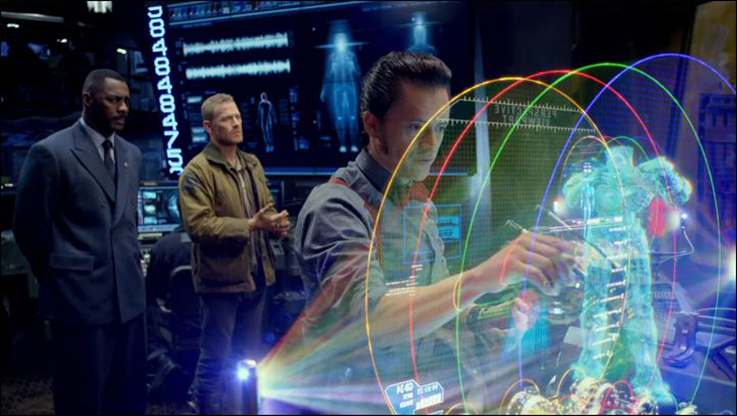
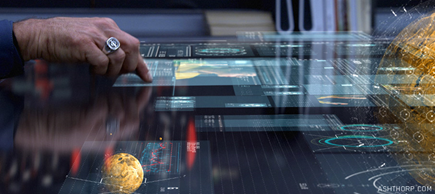
Then this past weekend I did a talk at XReality organized by Dom Wu called Dreaming in Holograms about my work in spatial computing and my hobby ‘gleaning’ sci fi scenes and screen scrapes from movie and television.

image

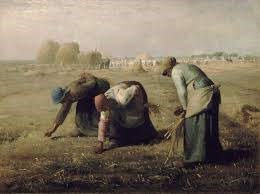
To glean, according to Webster’s, is to gather grain after the reapers have finished harvesting. Besides grain, you can also glean potatoes, grapes, vegetables, figs – pretty much anything that is left behind after the normal harvesting process. And I glean sci fi.

image

So I spent 90 minutes discussing my gleaning hobby and how it relates to my profession – building Holographic applications.

image

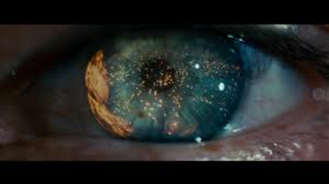
And of course how both of these have left me with a strange condition. I dream in holograms. My dreams are filled with semi-transparent buildings and semi-transparent people. This is true of my falling dreams as well as my swimming through air dreams. It’s even true of my being late to class and naked dreams. Oddly, though, all my nocturnal holograms are monochromatic, filled in with many shades of gray, and never in full color.

image

I’ve heard of a man in Japan who dreams in fish – which I find difficult to imagine.

Multi-modal User Input for Spatial Computing

input_mode

One of the fights that I thought we had put behind us is over the question ‘which interface is better?’ For instance, this question the was frequently brought up in comparisons of the mouse to the keyboard, its putative precursor. The same disputes came along again with the rise of natural user interfaces (NUI) when people began to ask if touch would put the mouse out of business. Always the answer has been no. Instead, we use all of these input modes side-by-side.

As Bill Buxton famously said, every technology is the best at something and the worst at something else. We use the interface best adapted to the goal we have in mind. In the case of data entry, the keyboard has always been the best tool. For password entry, on the other hand, while we have many options, including face and speech recognition, it is remarkable how often we turn to the standard keyboard or keypad.

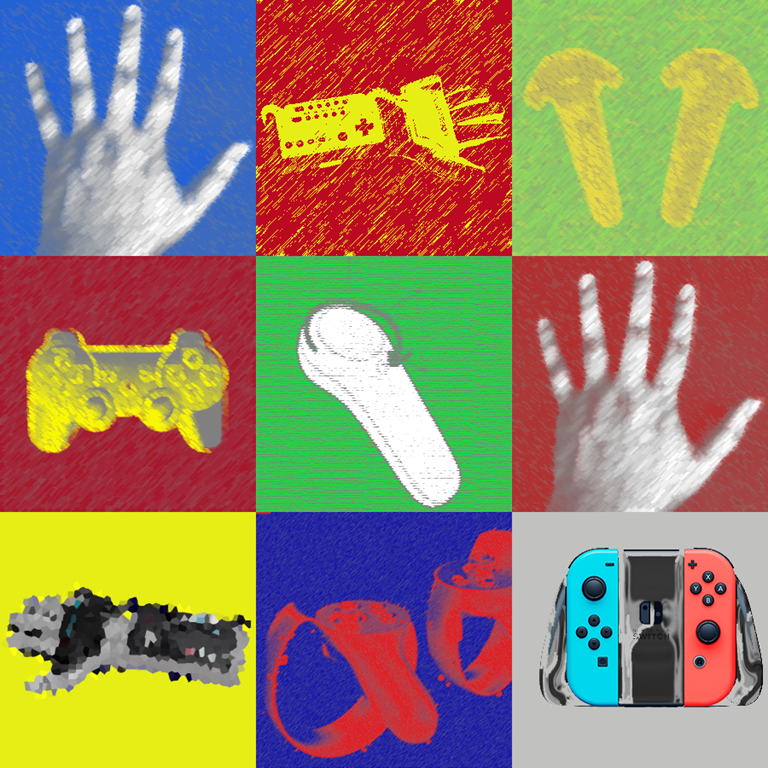
Yet I’ve found myself sucked into arguments about which is the best interaction model, the HoloLens v1’s simple gestures, the Magic Leap One’s magnetic 6DOF controller, or the HoloLens v2’s direct manipulation (albeit w/o haptics) with hand tracking.

Ideally we would use them all. A controller can’t be beat for precision control. Direct hand manipulation is intuitive and fun. To each of these I can add a blue tooth XBox controller for additional freedom. And the best replacement for a keyboard turns out to be a keyboard (this is known as the Qwerty’s universal constant).

It was over two years ago at the Magic Leap conference that James Powderly, a spatial computing UX guru, set us on the direction of figuring out ways to use multiple input modalities at the same time. Instead of thinking of the XOR scenario (this or that but not both) we started considering the AND scenario for inputs. We had a project at the time, VIM – an architectural visualization and data reporting tool for spatial computing –, to try it out with. Our main rule in doing this was that it couldn’t be forced. We wanted to find a natural way to do multi-modal that made sense and hopefully would also be intuitive.

We found a good opportunity as we attempted to refine the ability to move building models around on a table-top. This is a fairly universal UX issue in spatial computing, which made it even more fascinating to us. There are usually a combination of transformations that can be performed on a 3D object at the same time for ease of interaction: translation (moving from position x1 to position x2), scaling the size of the object, and rotating the object. A common solution is to make each of these a different interaction mode triggered by clicking on a virtual button or something.

rotate_touch

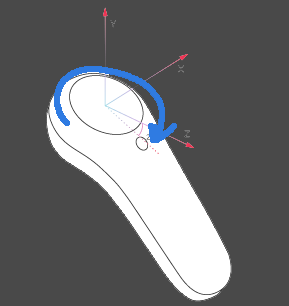
But we went a different way. As you move a model in space by pointing the Magic Leap controller in different directions like a laser pointer with the building hanging off the end, you can also push it away by pressing on the top of the touch pad or rotate it by spinning your thumb around the edge of the touch pad.

This works great for accomplishing many tasks at once. A side effect, though, is that while users rotated a 3D building with their thumbs, they also had a tendency to shake the controller wildly so that it seemed to get tossed around the room. It took an amazing amount of dexterity and practice to rotate the model while keeping it in one spot.

hand

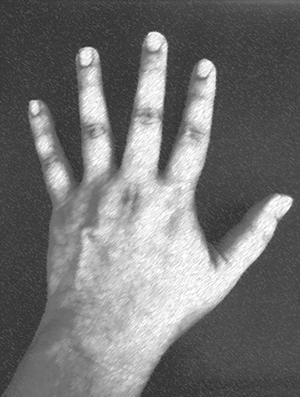
To fix this, we added a hand gesture to hold the model in place while the user rotated it. We called this the “halt” gesture because it just required the user to put up their off hand with the palm facing out. (Luke Hamilton, our Head of Design, also called this the “stop in the name of love” gesture.)

But we were on a gesture inventing roll and didn’t want to stop. We started thinking about how the keyboard is more accurate and faster than a mouse in data  entry scenarios, while the mouse is much more accurate than a game controller or hand tracking for pointing and selecting.

We had a similar situation here where the rotation gesture on the Magic Leap controller was intended to make it easy to spin the model in a 360 degree circle, but consequently was not so good for very slight rotations (for instance the kind of rotation needed to correctly orient a life-size digital twin of a building).

rotate_controller

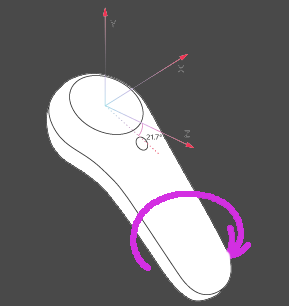
We got on the phone with Brian Schwab and Jay Juneau at Magic Leap and they suggested that we try to use the controller in a different way. Rather than simply using the thumb pad, we could instead rotate the controller on its Z-axis (a bit like a screwdriver) as an alternative rotational gesture. Which is what we did, making this a secondary rotation method for fine-tuning.

And of course we combined the “halt / stop in the name of love” gesture with this “screwdrive” gesture, too. Because we could but more importantly because it made sense and most importantly because it allows the user to accomplish her goals with the least amount of friction.

The Image Book: A Review

image-book

Jean-Luc Godard released Le livre d’image in 2018. It is a montage film that stitches together brief film images – from the history of cinema, from the news and from his own films.

While it uses the same strange score editing as Farwell to Language, the overall effect is much more hypnotic – and beautiful.

The quick edits are overlaid with narration by Godard himself. At a certain point, his reflections turn to France’s relationship to the middle east and there is some original footage that Godard shot.

Montage films are kind of wonderful. There’s Wong Kar-wai’s film Hua yang de nian hua that stitches clips from Asian cinema totally unfamiliar to Western audiences. Watching it feels like glimpsing into a secret world. The beautiful scene in Cinema Paradiso that collects all the scenes deemed by the Catholic censors to be too explicit is a celebration of life, sexuality and cinema all at once. A recent discovery for me was The Road Movie from 2016, which basically takes dashcam footage uploaded by Russians and serializes it. Most of the footage involves car crashes. The best parts of it, though, are the moments before the sudden car crashes where you listen in on friends chatting, spouses fighting or the Russian version of AM talk radio. There’s a strange feeling of normalcy to those moments that makes one feel that we are all the same, wherever we are, whatever language we speak.

And then the crash happens.

The Image Book doesn’t contain any crashes. Instead it feels like a journey through Jean-Luc Godard’s mind while looking at the world through the eyes of one of cinema’s great masters.

Goodbye to Language: A Review

goodbyetolanguage

I’ve watched Godard’s Goodbye to Language (“Adieu au Langage”, 2014) once so far. It deserves and requires multiple viewings. It is a montage film, shot with multiple cameras (including a Go Pro) and covering multiple overlapping and unrelated story lines. There are also lots of shots of Jean-Luc Godard’s dog.

The movie is purposefully annoying. Take for instance the use of fast cutting. Fast cutting comes from music video editing and is used to convey forceful action. But the fast editing is still tied together with an underlying soundtrack to provide a sense of continuity and to bracket a series of related footage. Godard, on the other hand, undermines this by starting a piece of the score and then chopping it unceremoniously like a record player losing its groove. And then he does this over and over with the same piece of unsatisfyingly broken music in different places throughout the film.

If there’s a clue to what the film is “about” (and does it really need to be about anything) it’s in a line in the last third of the film, about a couple on the verge of breaking up, where both characters say that they understand what their partner is saying but cannot understand what they themselves are saying. It’s like a reverse gaslighting. Which, to be fair, is what marital fights feel like.

Other parts of the film include ponderous philosophical monologues and dialogues about the “tyranny of the image” – the tendency of myth and magical thinking to displace discursive reason. Godard also has lots of scenes of people interacting with their phones in book stalls and standing next to other people, highlighting something that has become so common that we no longer comment on it, but which can still shock when we see it on film. Smartphones and internet culture are in their own way manifestations of the tyranny of the image, since they replace long-form thinking with easily digestible memes. To the point that we now take for granted that long-form is a  waste of time and assume that it is normal (or even possible) to absorb complex thoughts in a few minutes.

Naturally there is irony in the title and concept of the film since film itself is a replacement of discursive thought with images and syllogistic reasoning is replaced with a musical score to move us from one narrative moment to the next. Except in Godard’s hands, the film resists us and makes even the simplest things hard. It fucks up the score. It limits the beautiful long shots. It uses gritty camera footage at a time when high quality digital images are cheap and easy. The handling of the sex scene is bleehhhh. Worst of all, the central story is anti-ship in a medium that requires sexually appropriate relationship building to ensure commercial success.

The overall effect of the movie on me is that I struggled to watch it but can’t stop thinking about it even weeks later. And parts of the movie I thought were pretentious and had less there than met the eye – I now think contain infinite depth.

An extra feature of the film is that it was originally shot in 3D and was exhibited at Cannes in 3D. I watched it in 2D but now will try to track down the 3D DVD. Like other amazing films – such as Bi Gan’s masterpiece Long Day’s Journey Into Night  — it uses a cinematic medium that has since fallen out of favor.  I fortunately still have an old 3D flatscreen and a 3D DVD player to watch it on.

Other movies, like Ang Lee’s Gemini Man, which is ultimately a technical master’s experiment in 3D cinema, isn’t even available in 3D DVD format. Given the current death of the movie theater in America, there’s even a chance that we won’t ever be able to see it in its intended form again.

The Future of Cinema and Reader Response Theory

bigfootboardgame

One of the great burdens and pleasures of being at home is filling a lot of down time with streaming content. I currently stream from Amazon Prime, Netflix, Comcast, Disney, Shudder, Criterion Channel, Crunchyroll, Hulu, Master Class and HBO Max. Of these, Amazon Prime seems to be the least curated. You find the weirdest things.

Prime has a lot of Sasquatch movies. My early fascination with Bigfoot starts with the Leonard Nimoy In Search of … series and continues through Harry and the Hendersons, multiple The X-Files episodes, Abominable (the bigfoot movie based on Alfred Hitchcock’s Rear Window) and more recently The Man Who Killed Hitler and then the Bigfoot starring Sam Elliott and Aidan Turner.

tales_of_darkness

None of this had prepared me, however, for the experience that is Bigfoot Tales of Darkness. Here is the irresistible synopsis provided by Amazon:

This is a series of tales of Bigfoot, of a mythical creature from heaven that once was a arch angel named Lucifer has come to earth and man knows him as Bigfoot. As he kills and rampages humans through all the tales in this story.

I couldn’t get through more than ten minutes of it. The film seems to be pieced together out of stock video purchased online with some homemade electronic music layered over the top.

But I still want to give it the attention it may not deserve because it is so crazy and someone somewhere, using the tools available to them, went to the trouble of making a movie about Bigfoot being the devil and somehow got it onto Amazon Prime. Plus I have lots of extra non-commuting time these days.

There’s a theory of literature called Reader-response criticism that fits well into the way we currently consume media. It rejects modernist theories of authorial intent and concerns itself more with the experience of the reader. This was a precursor of the “death of the author” movements that came in the 80’s.

In our own times, the way people access media and the rise of cult followings has dramatically changed the way films are created, marketed and distributed. Audiences are balkanized in such a way that content marketed to small groups and genre fans can be highly profitable and can even afford to alienate large swathes of people. This is in contrast to massive budget superhero films that can only achieve profitability by killing on opening day as well as in overseas markets (esp China) and then in the cable, streaming and DVD aftermarkets as well as product tie-ins and merchandising.

Following some of Umberto Eco’s ideas, this made me wonder if I could make myself an ideal reader for this movie. An audience of one.

To accomplish this (and overcome my physical response to the first 10 minutes of Bigfoot Tales of Darkness, a combination of lethargy and nausea) I need to put it in a different intellectual context.

Godard

Because it might be some kind of highly experimental film that plays on genres and narrative structure, eschewing actors for stock video clips, I decided the avant-garde French film director Jean-Luc Godard might be a good reference for understanding (or creating an understanding) of what the ideal author of this Bigfoot movie is trying to say.

Godard’s last two films, in particular, have adopted a bricolage style of film-making, clipping together images and fragments, using both high quality film and low quality video, with often confusing sound editing that breaks up the continuity instead of tying it together like a normal movie score would do.

Over the next week I plan to watch and report on Godard’s 2014 award-winning film Goodbye to Language, about a couple’s breakup interspersed with shots of a dog playing, and his 2018 film The Image Book about the misrepresentation of Arab culture in Western movie making.

They both have poor reviews on IMDB. Critics, amirite?

I’ll follow this with a fair attempt to assess Bigfoot Tales of Darkness on its own terms.