New York Augmented Reality Meetup presentation

I did a presentation on ‘Before Ubiquity’ to the New York AR Meetup in November. It went rather well and I hope you like it. Andrew Agus, who’s been keeping the AR flame burning on the east coast for many years — read the original blog post and thought it could be repackaged as a talk – he was right!

The New York Augmented Reality group is one of the OG’s of AR. Among many notable meetings, fireworks flew in the April 11, 2022 “Great Display Debate” between Jeri Ellsworth and Karl Guttag. You’ll come away knowing a lot more about AR and VR after watching it.

https://www.youtube.com/watch?v=NeECmKWjwqg&t=4s

Are Prompt Engineering Jobs at Risk because of A.I.?

As you know, many AR/MR developers left the field last year to become prompt engineers. I heard some bad news today, though. Apparently A.I. is starting to put prompt engineers out of work.

A.I. is now being used to take normal written commands — sometimes called “natural” language – sometimes called by non-specialists “language” — and processing it into more effective generative A.I. prompts. There’s even a rumor circulating that some of the prompts being used to train this new generation of A.I. come from the prompt engineers themselves. As if every time they use a prompt, it is somehow being recorded.

Can big tech really get away with stealing other people’s work and using it to turn a profit like this?

On the other hand, my friend Miroslav, a crypto manager from Zagreb, says these concerns are overblown. While some entry level prompt engineering jobs might go away, he told me, A.I. can never replace the more sophisticated prompt engineering roles that aren’t strictly learned by rote off of a YouTube channel.

“A.I. simply doesn’t have the emotional intelligence to perform advanced tasks like creating instructional YouTube videos about prompt engineering. Content creation jobs like these will always be safe.”

Learning to Program for the Apple Vision Pro

Learning to program for the Apple Vision Pro can be broken into 4 parts:

  • Learning Swift
  • Learning SwiftUI
  • Learning RealityKit
  • Learning Reality Composer Pro (RCP)

There are lots of good book and video resources for learning Swift and SwiftUI. Not so much for RealityKit or Reality Composer Pro, unfortunately.

If you want to go all out, you should get a subscription to https://www.oreilly.com/ for $499 per yr. This gives you access to the back catalogs of many of the leading technical book publishers.

Swift

To get started on Swift, iOS Programming for Beginners by Ahmad Sahar is pretty good. iOS 17 Programming for Beginners though the official Apple documentation will get you to the same place: https://developer.apple.com/documentation/swift

If you want to dive deeper into Swift, after learning the basics, the Big Nerd Ranch Guide, 3rd edition, is a good read: Swift Programming: The Big Nerd Ranch Guide

But if you want to learn Swift trivia to stump your friends, then I highly recommend Hands-On Design Patterns with Swift by Florent Vilmart and Giordano Scalzo: Hands-On Design Patterns with Swift

SwiftUI

SwiftUI is the library you would use to create menus and 2D interafaces. There are 2 books that are great for this, both by Wallace Wang. Start with Beginning iPhone Development with SwiftUI and once you get that down, continue, naturally, with Wallace’s Pro iPhone Development with SwiftUI .

RealityKit

Even though Apple first introduced RealityKit in 2017, very few iPhone devs actually use it. So even though there are quite a few books on SceneKit and ARKit, RealityKit learning resources are few and far between. Udemy has a course by Mohammed Azam that is fairly well rated. It’s on my shelf but I have yet to start it. Building Augmented Reality Apps in RealityKit & ARKit

Reality Composer Pro

Reality Composer Pro is sort of an improved version of Reality Composer and sort of something totally different. It is a tool that sits somewhere between the coder and the artist – you can create models (or “entities”) with it. But if you’re an artist, you are probably more likely to import your models from Maya or another 3D modeling tool. As a software developer, you can then attach components that you have coded to these entities.

There are no books about it and the resources available for the previous Reality Composer aren’t really much help. You’ll need to work through Apple’s WWDC videos and documentation to learn to use RCP:

WWDC 2023 videos:

Meet Reality Composer Pro

Explore materials in Reality Composer Pro

Work with Reality Composer Pro content in Xcode

Apple documentation:

Designing RealityKit content with Reality Composer Pro

About Polyspatial

If you are coming at this from the HoloLens or Magic Leap, then you are probably more comfortable working in Unity. Unity projects can, under the right circumstances, deploy to the VisionOS Simulator. You should just need the VisionOS support packages to get this working. Polyspatial is a tool that allows you to convert Unity shaders and materials into VisionOS’s native shader framework — and I think this is only needed if you are building mixed reality apps, not for VR (fully immersive) apps.

In general, though, I think you are always better off going native for performance and features. While it may seem like you can use Unity Polyspatial to do in VisionOS everything you are used to doing on other AR platforms, these tools ultimately sit on top of RealityKit once they are deployed. So if what you are trying to do isn’t supported in RealityKit, I’m not sure how it would actually work.

Before Ubiquity

ubiquitous AR

I’ve been developing for augmented reality head-mounted displays for about eight years. I first tried the original HoloLens in 2015. Then I got to purchase a developer unit in 2016 and started doing contract work with it. Later I was in the early pre-release dev program for Magicleap’s original device, which led to more work on the HoloLens 2, Magicleap 2, and Meta Quest Pro. I continue to work in AR HMDs today.

The original community around the HoloLens was amazing. We were all competing for the same work, but at the same time, we only had each other to turn to when we needed to talk to someone who understood what we were going through. So we were all sort of frenemies, except that because Microsoft was notoriously tight-lipped with their information about the device, we helped each other out on difficult programming tricks and tricky AR UI concepts – and this made us friends as well.

In those early days, we all thought AR, and our millions in riches (oh what a greedy lot we were), were just around the corner. But we never quite managed to turn that corner. Instead we had to begin devising theories around what that corner was going to look like, what the signs would be as we approached that corner, and what would happen after we made the corner. Basically, we had to become more stringent in our analyses.

Out of this, one big idea that came to the fore was “AR Ubiquity”. This comes out of the observation that monumental technological change happens slowly and incrementally, until it suddenly happens all at once. So at some point, we believe, everyone will just be wearing AR headsets instead of carrying smartphones. (This is also known, in some quarters, as the “Inflection Point”.)

Planning, consequently, should be based less on how we get to that point, or even when it will happen; and more about how to prepare for “AR Ubiquity” and what we will do afterwards. So AR Ubiquity, in this planning model, can come in 3 years, or in 7 years, or maybe for the most skeptical of us in 20 years. It doesn’t really matter because the important work is not in divining when it will happen (or even who will make it happen) but instead in 1) what it will look like and 2) what we can do — as developers, as startups, as corporations — once it arrives.
meta-history

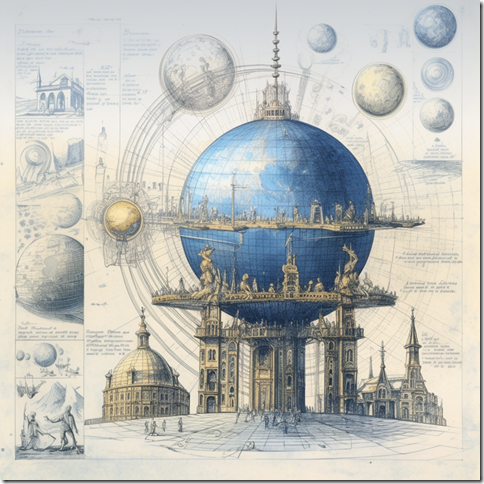
Once we arrive at a discourse about the implications of “AR Ubiquity” rather than trying to forecast when it will happen, we  are engaging with a grand historical narrative about the transformative power of tech – which is a happy place for me because I used to do research on philosophical meta-history in grad school – though admittedly I wasn’t very good at it.

“AR Ubiquity”, according to the tenets of meta-history, can at the same time both be a theory about how the world works and also a motif in a story about how we fit into the technological world. Both ways of looking at it can provide valuable insights. As a theory we want to know how we can verify (or falsify) it. As a story element, we want to know what it means. In order to discover what it means, in turn, we can excavate it for other mythical elements it resembles and draws upon. (Meta-history, it should be acknowledged, can lead to bad ideas when done poorly and probably worse ideas when it is done well. So please take this with a grain of salt (a phrase which itself has an interesting history, it is worth noting).

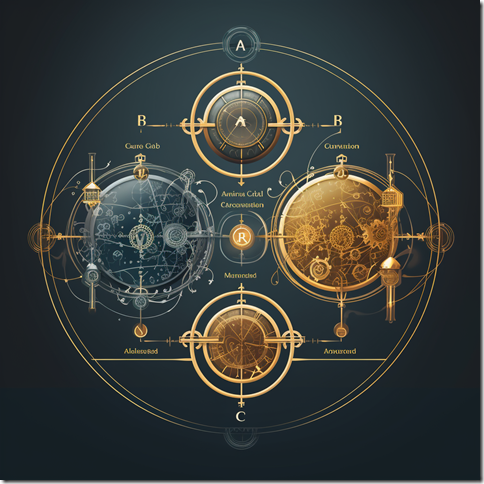
I can recall three variations on the theme of disruptive (or revolutionary) historical change. There’s the narrative of the apocalyptic event that you only notice once it has already happened. There’s the narrative of the prophesied event that never actually happens but is always about to. And then there’s the heralded event, which has two beats: one to announce that it is about to happen, and another when it does happen. We long thought AR would follow model A, it currently looks like it is following model B, and I hope it will turn out that we are living through storyline C. Let’s unpack this a bit.
A or B

Model A

Apocalyptic history, as told in zombie movies and TV shows, generally have unknown origins. The hero wakes up after the fateful event has already happened, often in a hospital room, and over the course of the narrative, she may or may not discover whether it was caused by a sick monkey who escaped a viral lab, or by climate change, or by aliens. There’s also the version of apocalyptic history that circulates in Evangelical Christian eschatology known as The Rapture. In the Book of Revelations (which New Yorker writer Adam Gopnik calls the most cinematic Michael Bey ready book of the Bible), St. John of Patmos has a vision in which 144,000 faithful are taken into heaven.  In popular media, people wake up to find that millions of the virtuous elect have suddenly disappeared while they have been left behind to try to pick up the pieces and figure out what to do in a changed world.

In the less dramatic intellectual upheavals described in Thomas Kuhn’s The Structure of Scientific Revolutions, you can start your scientific career believing that an element known as phlogiston is released during combustion, then end it believing that phlogiston doesn’t exist and instead oxygen is added to a combusted material when it is burned (it is oxidized). Or you might start believing that the sun revolves around the earth and end up a few decades later laughing at such beliefs, to the point that it is hard to understand how anyone ever believed such outlandish things in the first place.

It’s a bit like the way we try to remember pulling out paper maps to drive somewhere new in our car, or shoving cassette tapes into our Walkmans, or having to type on physical keys on our phones – or even recalling phones that were used just for phone calls. It seems like a different age. And maybe AR glasses will be the same way . One day it seems fantastical and the next we’ll have difficulty remembering how we got things done with those quaint “smart” phones before we got our slick augmented reality glasses.

waiting for godot

Model B

 The history of waiting might best be captured by the term Millennialism, which describes both Jewish and Christian belief in the return of a Messiah after a thousand years. The study of millennialist beliefs often cover both the social changes that occur in anticipation of a Millennialist event as well as the consequent recalculation of calendars that occurs when an anticipated date has passed and finally the slow realization that nothing is going to happen, after all.

But there are non-theistic analogs to Millennialism that share some common traits such as the Cargo Cult in Fiji or later UFO cults like the Heaven’s Gate movement in the 90’s. Marxism could also be described as a sort of Millenarist cult that promised a Paradise that adherents came to learn would never arrive. One wonders at what point, in each of these belief systems, people first began to lose faith and then decided to simply play along while lacking actual conviction. The analogy can be stretched to belief in concepts like tulip bulb mania, NFTs, bitcoin, and other bubble economies where conviction eventually becomes less important than the realization that everyone else is equally cynical. In the end, it is cynicism that maintains economic bubbles and millenarist belief systems rather than faith.

I don’t think belief in AR Ubiquity is a millenarist cult, yet. It certainly hasn’t reach the stage of widespread cynicism, though it has been in a constant hype cycle over the past decade as new device announcements serve to refresh excitement about the technology. But even this excitement is making way, in a healthy manner, for a dose of skepticism over the latest announcements from Meta and Apple. There’s a hope for the best but expect the worst attitude in the air that I find refreshing, even if I don’t subscribe to it, myself.

the silver surfer

Model C

The last paradigm for disruptive history comes in the form of a herald and the thing he is the herald for. St. John the Baptist is the herald of the Messiah, Jesus Christ, for example. And Silver Surfer is the herald for Galactus. One is a forerunner for good tidings while the other is a harbinger of doom.

The forerunner isn’t necessary for the revolutionary event itself. That will happen in any case. The forerunner is there to let us know that something is coming and to point out where we should be looking for it. And there is just something very human about wanting to be aware of something before it happens so we can more fully savor its arrival.
ar_forever

Model C is the scenario I find most likely and how I imagine AR Ubiquity actually happening.

First we’ll have access to a device that demonstrates an actually useable AR headset with actually useful features. This will be the “it’s for real” moment that dispels the millenarist anxiety that we’re all being taken for a ride.

The “it’s real” moment will then set a bar for hardware manufacturers to work against. The forerunner device becomes the target all AR HMD companies strive to match, once someone has shown them what works, and within a few years we will have the actual arrival of AR Ubiquity.

At this time, reviews of the Apple Vision Pro and the Meta Quest 3 suggest that either could be this harbinger headset. I have my doubts about the Meta Quest 3 because I’m not sure how much better it can be than the MQ2 and the Meta Quest Pro, especially since it has removed eye tracking, which was a key feature of MQP and made the hand tracking more useful.

The AVP, on the other hand, has had such spectacular reviews that one begins to wonder if  it isn’t too good to be true.

But if the reviews can be taken at face value, then AR Ubiquity, or at least a herald that shows us it is possible, might be closer than we think.

I’m just proposing a small tweak to the standard model of how augmented reality headsets will replace smartphones. We’ve been assuming that the first device that convinces consumers to purchase AR headsets will also immediately set off this transition from one device category to the other. But maybe this is going to occur in two steps. First a headset will appear that validates the theory that headsets can replace handsets. Then a second device will rotate the gears of history and lead us into this highly anticipated new technological age.


AWE Presentation

My colleague, Astrini Sie, and I delivered a talk called Porting HoloLens Apps to Other Platforms at AWE 2023. Astrini is an AI researcher, so we threaded AI and AR together to see what AI can teach AR.

Here is the synopsis and a link.

https://www.youtube.com/watch?v=BkE3y_uSfa8

“Although Microsoft has substantially withdrawn from its Mixed Reality and Metaverse ambitions, this left behind a sizable catalog of community built enterprise apps and games, as well as a toolset, the MRTK, on which they were developed. In this talk, we will walk you through the steps required to port a HoloLens app built on one of the MRTK versions to other platforms such as the Magic Leap 2 and the Meta Quest Pro. We hope to demonstrate that, due to clever engineering, whole ecosystems can be moved from one platform to other newer platforms, where they can continue to evolve and thrive.”

Tip: Update your Magic Leap SDK the easy way

In the early HTK and then MRTK days, updating a project with the latest version of the HoloLens software dev kit was always a little scary, and most developers tended to avoid doing it. Because the toolkit was often volatile, updates were hard to do, sometimes involved breaking changes, and then were extremely hard to back out of. As a rule, the version number of the MRTK you started a project with was going to be the version number of the MRTK you would be finishing it with.

Magic Leap has been coming out with SDK updates at the rate of about one a month in 2023. Fortunately they came out with a tool last month, the Magic Leap Setup Tool published in the Unity Asset Store, that makes this pretty painless, both for upgrading and downgrading.

https://assetstore.unity.com/packages/tools/integration/magic-leap-setup-tool-194780

ml_menu

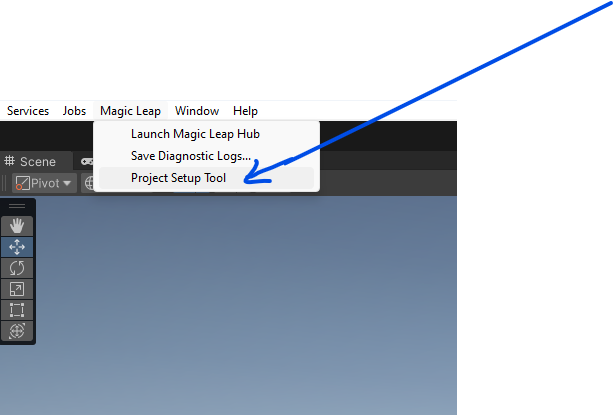
Once you’ve installed the Setup Tool in your Magic Leap project, it will appear in your Unity toolbar. Magic Leap just came out with a their new v1.2.0 SDK yesterday. I used the Magic Leap Hub tool to download all the latest bits and also update my Magic Leap headset. To update one of my projects built on the previous v1.2.0-dev2 SDK, all I did was go to the project menubar, pull down the Magic Leap tab, and select Project Setup Tool.

tool

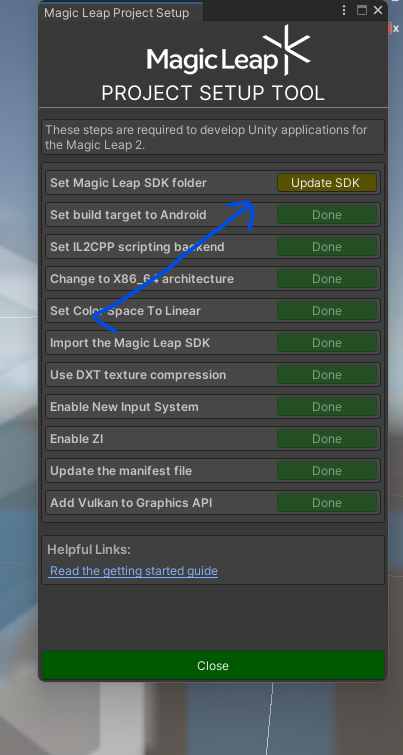
Next, I clicked on the “Update SDK” button to set a new Magic Leap SDK folder.

new_sdk

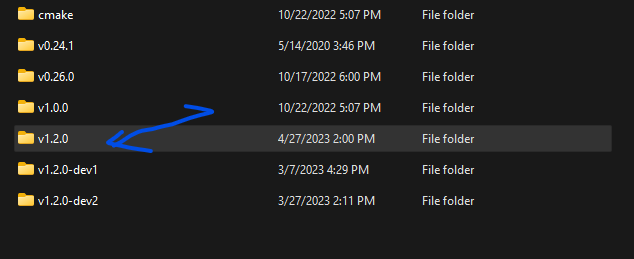
I switched my SDK folder from “v1.2.0-dev2” to “v1.2.0”. I got a small dialog asking if I wanted to switch out my Magic Leap package. I replied OK.

update

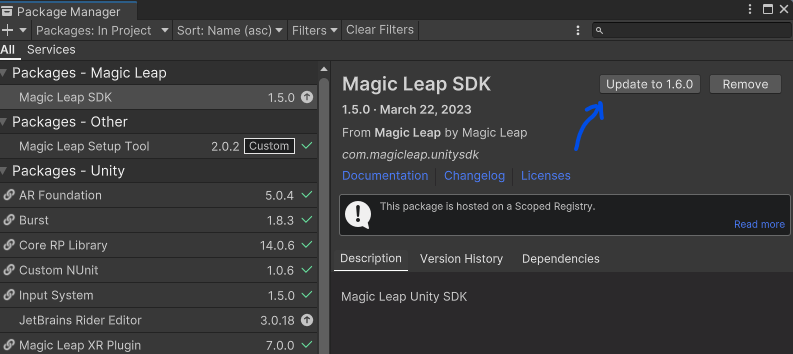
Next step, go into Package Manger and update the Magic Leap Unity SDK package if you need to (the picture above shows upgrading from 1.5.0 to 1.6.0).

prefs

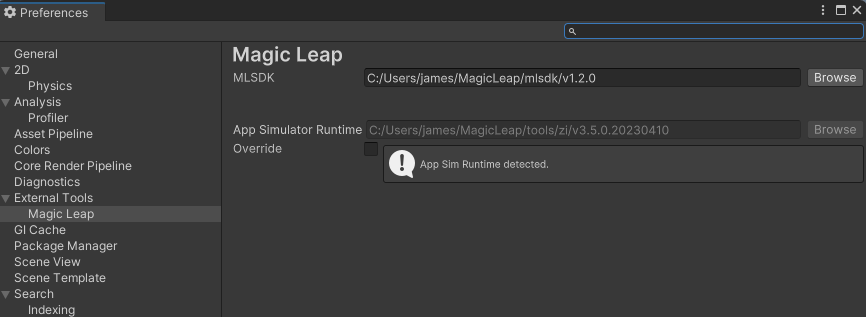
The last step is to go into your Preferences and check the External Tools | Magic Leap tab. You’ll want to reference the right Magic Leap directory here in order to make sure you have the right ML Simulator associated with your Unity editor.

As a long time admirer of the HoloLens MRTK, I have to say this is a distinct improvement.

What the heck just happened to HoloLens?

IMG_1119

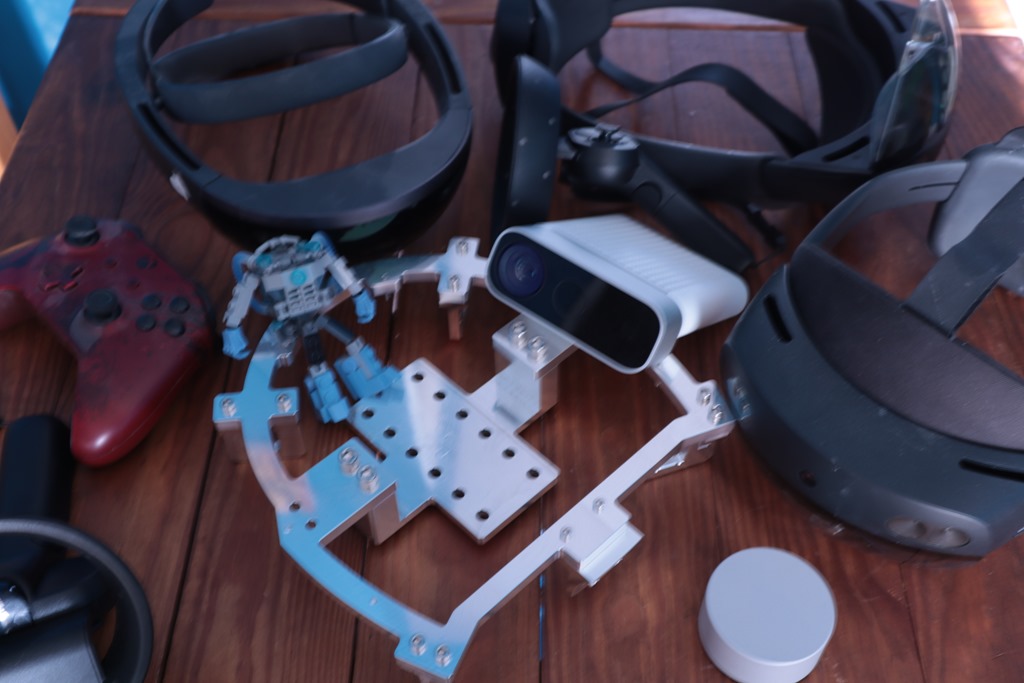
Last Wednesday, on January 18, Microsoft laid off 10,000 employees, or 5% of its workforce. That same day, Bloomberg reported that some of the cuts were targeting the HoloLens hardware team, which had just been moved under Panos Panay in June, 2022 while the software team had been placed under a different organization and the previous head of the HoloLens combined group, Alex Kipman, was maneuvered out of the company.

mrtk_layoff

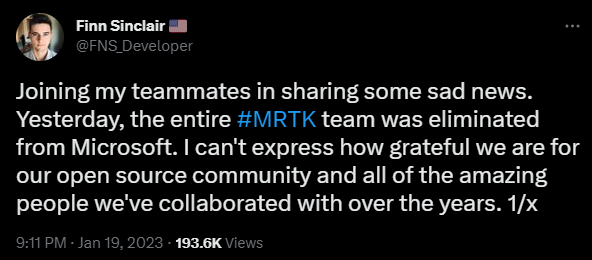
Over last week, further announcements on social media indicated how thoroughly Microsoft’s MR and VR commitments had been deracinated. It turned out that the entire MRTK engineering group, which created and maintained the SDK and tools for developing on the HoloLens, had been laid off. This was problematic, because if you remove the team supporting the tools people use to develop on the HoloLens, people will stop developing for the HoloLens. It was hard to see this as an accidental by product of cost cutting moves and easy to see it as part of a larger strategic shift at Microsoft.

Microsoft also laid off the employees of AltSpaceVR, central to its Metaverse ambitions, announcing that the site would be shut down on March 10. Microsoft had acquired AtlSpaceVR in 2017.

Various announcements claimed that the work that had been done at AltSpaceVR would be taken up by the Microsoft Mesh team, which is under the Microsoft Teams organization. At the same time, however, there were rumors going around that up to 80% of the Mesh team had also gotten the axe, including some of their product community evangelists.

jessem

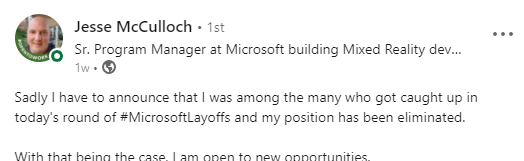
So to sum up, Microsoft cut deep into HoloLens hardware, the MRTK team, the AltSpaceVR business, and its Mesh team. In addition, they pushed out the organizational exec of the HoloLens team in the summer of 2022 and split his people between two other divisions where they no longer had his protection as the head of a Microsoft fiefdom. The HoloLens – and in turn Microsoft’s investment in Mixed Reality and the Metaverse – was probably already dead at that point. There was hope from the HoloLens developer community that they were simply pausing to see how Apple’s MR strategy would pan out. If there was some possibility that a successful marketing push by Apple would encourage Microsoft to move forward with their headsets, those hopes are now dashed. The cuts have been too deep. There will never be a HoloLens 3.

On the bright side…

Microsoft was first out of the gate to set a standard for what high-end augmented reality headsets would be like – even adapting an old unused term, “mixed reality”, to emphasize the difference between phone based AR and what they were doing.

Previously they had done a similar thing with the Kinect by creating a new market for low-cost 3D depth sensors, which in turn created an ecosystem of alternative vendors, which in turn created a supply chain for 3D components as well as competing technology for 3D capture such as photogrammetry and computer vision, which finally led to the world sensing components today that make untethered VR and self-driving cars possible.

With the HoloLens they helped forge a developer community, changed the priorities of 3D game engine companies like Unity and Unreal, provided competition for up and coming MR vendors like Florida-based Magic Leap, tested out the limits of mixed reality scenarios and proofed out the appetite for passthrough AR, used in the Meta Quest Pro, HTC Vive Elite, and the upcoming Apple MR device, while we all wait on advances in waveguide technology and its alternatives.

In a large sense, Microsoft, Alex Kipman, the thousands of people who worked on the Microsoft HoloLens team as well as the thousands of developers who helped to build out MR experiences for enterprise and commercial products, accomplished their mission. They pushed the tech forward.

The truth is, Microsoft has often been extremely good at helping to build out promising technology but has rarely been good at sticking with technology to the viability phase. The biggest example is being early to tablets and phones, realizing they were waaay too early, and then trying to pick them up again after other tech giants had already cornered the market on these devices. With some notable exceptions, like the Xbox, hardware just isn’t Microsoft’s game and they aren’t comfortable with it.

Which is okay since thanks to their work, Meta, Magicleap, HTC, NVidia and others are stepping into the gap that Microsoft is leaving behind. Advances in MR and VR (“metaverse”) tech and experience design will be made at those companies. The laid off HoloLens workers will be snatched up by these other companies and the developer community will adapt to building for these other hardware devices.

While more work needs to be done, the MRTK in both its version 2 and version 3 flavors, provide a good way for MR developers and companies invested in mixed reality to pivot and port to new devices.

Pivot and port

There are several constructive steps that can be taken over the next few months to continue to push MR forward. The first is renaming and refocusing the HoloDevelopers slack community. This has been the most successful and lively meeting spaces over the past six years for sharing mixed reality news, knowledge and gossip. Thank goodness it never got moved over the Teams, as was once proposed. But it does need to be renamed, since it now covers a much broader MR ecosystem than just the Microsoft HoloLens, and it needs some financial support to enable searching of the archives for past, now hidden information, about how to get things done. No one should be re-inventing the wheel simply because we can’t search the archives.

The next thing that needs to be done is to unravel the MRTK situation. In principle the MRTK is an API layer that will target multiple devices. One of the targets of the MRTK developed over the past couple of years is OpenXR, which in turn is also an API layer that targets multiple devices. (It’s confusing, I know, and I’ve been planning to write a Foucauldian analysis of soft power exercised through API dominance for about a year to explain it.)

There are also two versions of the MRTK, v2 and v3, both of which work with OpenXR. In principle, if you have an app that sits on top of MRTK, and it targets OpenXR, then you should be able to repoint your app at another device, such as the various Meta passthrough AR devices or the Magic Leap 2 MR device, and have it mostly work.

Here are some kinks.

  1. An OpenXR implementation requires that particular hardware device vendors create plugins that map the OpenXR API to their particular HMDs. This can be done more or less well. It can be done in its entirety or only partially. Magicleap, for instance, has a beta plugin available for the Unity implementation of OpenXR, but this still isn’t done, yet (please hurry Magicleap!).
  2. There are platform specific features that haven’t been generalized in OpenXR. For instance, Microsoft has a World Locking system that worked with its World Anchors system to make world anchors not drift so much. But the world locking system sits outside of OpenXR.
  3. MRTK3 hasn’t been published in anything other than preview versions. The team has been laid off a couple of weeks before the first planned release.
  4. For this reason, not many apps are using MRTK3. Also for this reason, it is unlikely that anyone will try to port their apps from MRTK2 to MRTK3, which is an untrivial task.
  5. Some have expressed a hope that the community will pick up the work and support of MRTK3, which was an open source project almost exclusively managed and worked on by Microsoft employees. The problem here is that this hasn’t historically happened. Open source projects are rarely community supported, but require someone to be paid to do it. When Microsoft dropped support of the early HoloLens Toolkit in 2017, it was only two independent developers, rather than a large pool of indie devs sharing the work, that did the majority of the labor involved in expanding it and rearchitecting it into MRTK2.
  6. A re-porting strategy is vital for the MR ecosystem to thrive. Startups need to be able to show that they are not hardware dependent and can get up and running again on a new device over the next three to six months.
  7. Additionally, there are hundreds of HoloLens apps, most not on any public store, available to be ported to alternative headset platforms. And every HMD platform currently has a strong need for more apps.
  8. But none of this can happen without a consensus on whether the ecosystem will be adopting MRTK2 going forward or MRTK3. And it can’t happen unless there is an ongoing commitment to support the MRTK source code.
  9. There are two aspects to the MRTK that make it vital to the ongoing progress of mixed reality. I’ve already discussed the importance of a porting strategy.

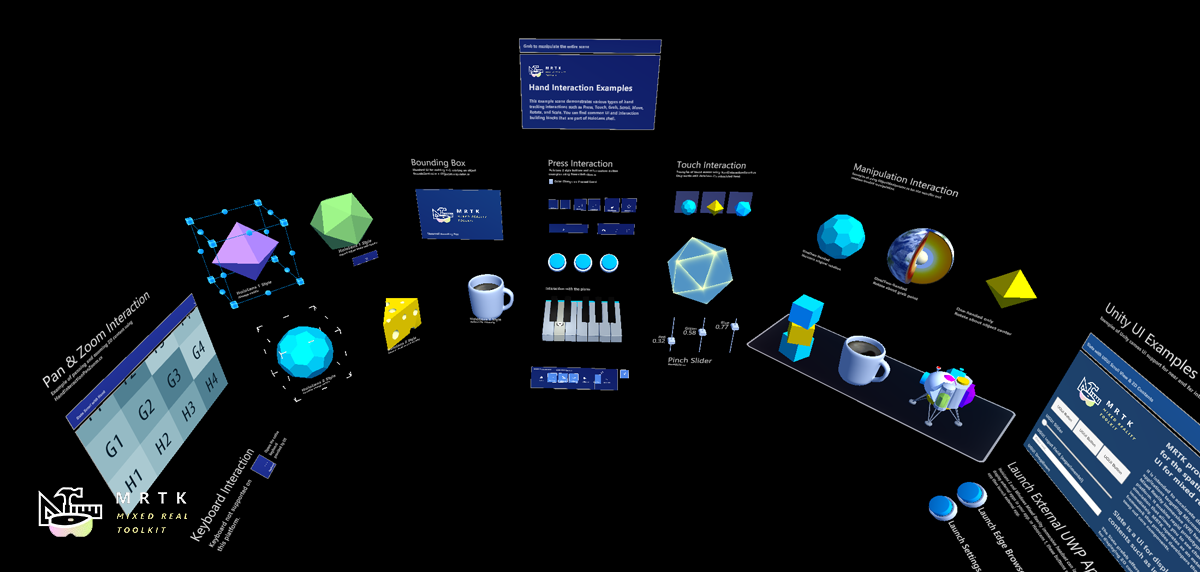
Hand Interaction Examples 1

The second key feature of the MRTKs is the interaction samples. These are for all practical purposes the best and in some sense only user interfaces available in MR and VR. If you need to enter data or push a button in either mixed reality or the metaverse, these are the tools you should use. They were carefully designed, following user research, but a team at Microsoft led by Julia Schwartz. They are amazing.

But they are also in a big sense reference samples. They need further work to optimize performance and to smooth out usability on a variety of platforms.

It is possible that another company – Unity, Meta, Mgicleap, etc – could step in and develop a new set of tools with ongoing maintenance. But at this point there isn’t.

Summing up

To sum up:

  1. The HoloLens is dead. It has been for about six months.
  2. … but it helped to create a community as well as a device ecosystem that goes on.
  3. The community at HoloDevelopers needs some funding and a second wind, but it has grown organically to be a central repository of knowledge about the development and design of MR apps.
  4. The MRTKs require some hard choices and then a lot of love to make them work well across hardware platforms.
  5. The interaction samples of the MRTKs are a national treasure and also need a lot of love from the community.
  6. We need lots of blog posts and videos covering how to port HoloLens apps to the MQP (Oculus), HTC Elite, Magicleap, and eventually the Apple MR device. In the process we can identify the gaps and issues involved in porting and try to fix them.
  7. Go hug a laid off Microsoft HoloLens employee if you can. I have high confidence they will all land well because they are highly skilled people in a field Microsoft is dropping in favor of generative AI (a reasonable move) but it’s still going to be a tough few months emotionally until they do.
  8. While you are at it, maybe go join the Holodevelopers slack group and hug a non-Microsoft developer, too. They’ll all be fine, too, but its tough to see the work you’ve been doing for the past seven years suddenly drop out from under you.
  9. Off the top of my head, here are some great ones to reach out to: Sean Ong, Joost van Schaik, Dennis Vroegop, Jason Odom, Stephen Hodgson, Simon Jackson, Vincent Guigui, Rene Schulte, Lucas Rizzotto, Andras Velvart, Sky Zhou, Huy Le, Eric Provencher, Lance Larsen, Dwayne Lamb, Charles Poole, Dino Fejzagic, and tons of others I can’t recall right away but that you will hopefully remind me of. They are all heroes.
  10. The ride continues. Just not at Microsoft.